Trump signs multiple executive orders on first day in office: TikTok, birthright citizenship, Musk, and withdrawal from two international organizations
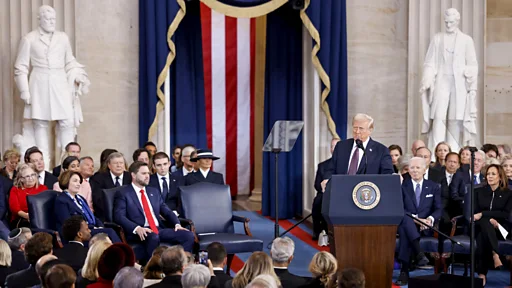
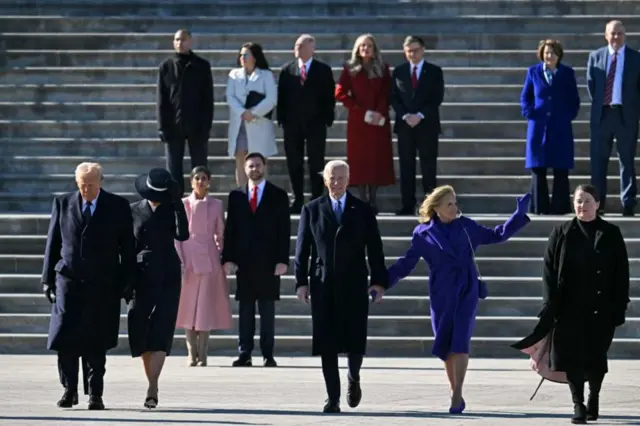
On January 20, after being sworn in, Donald Trump officially became the 47th President of the United States.
In the 73 days from his election victory to his official inauguration, Trump continued to make shocking remarks - from imposing tariffs on Canada, Mexico and China on his first day in office, to claiming sovereignty over the Panama Canal and Greenland, to claiming that Canada is the 51st state of the United States.
These remarks have brought world-class attention to this unconventional president, especially on his first day in office - to what extent will his astonishing claims be fulfilled on that day?
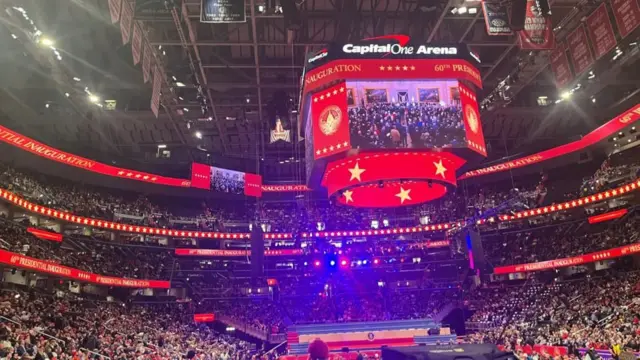
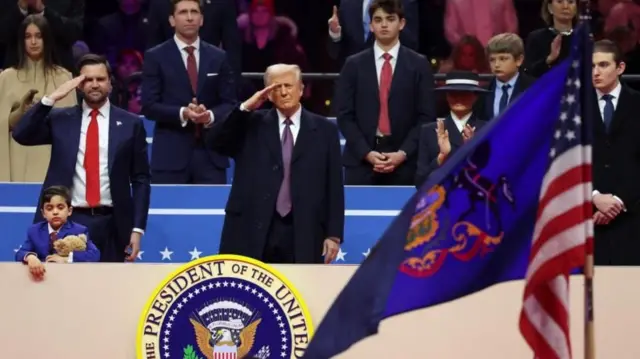
After the swearing-in ceremony, Trump began signing a series of executive orders in two parts: one was in front of 20,000 supporters at the Capital One Arena in Washington, the home of the NBA's Washington Wizards, and then he returned to the Oval Office of the White House to sign the second batch of executive orders in front of a small number of reporters.
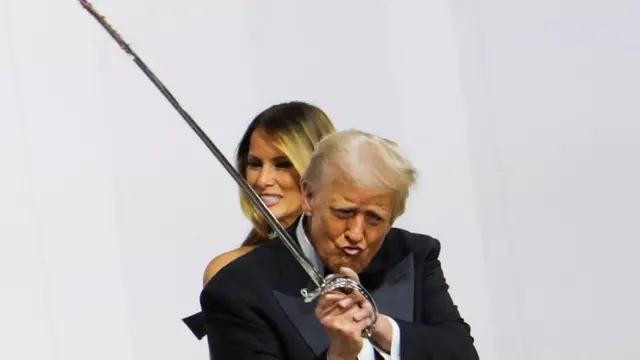
BBC North America correspondent Anthony Zurcher reports that Donald Trump turned a routine presidential act - revoking the previous government's executive orders - into a flamboyant show. After delivering another roundabout speech (his third of the day), Trump walked to a small table on the stadium stage and proceeded to freeze new federal regulations and hiring, rescind the Biden administration's directives, force federal employees to work full-time, and announce the withdrawal from the Paris Climate Agreement. After the ceremony, Trump threw the pen he used to sign into the crowd - once again showing his signature flamboyance.
Related to China
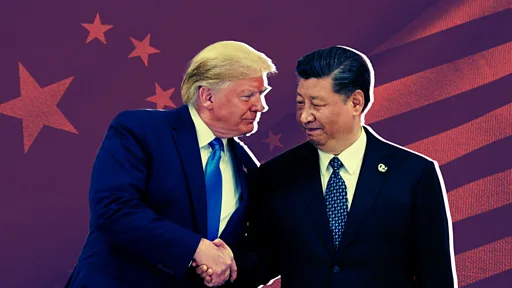
"Tariffs are going to make us very rich," Trump said in a stadium speech to loud applause. Trump told the crowd that of the most beautiful words in the dictionary, God is first, religion is second, love is third and tariffs are fourth. Throughout the campaign, Trump had promised to impose high tariffs on Mexico, Canada and China on his first day in office. But Trump officials told US media on Monday that he would issue a broad trade memo that would hold off on imposing tariffs immediately and instead focus on investigating the US's trade relationship with the three countries.
Later, as Trump continued to sign executive orders in the Oval Office, including one involving TikTok (the overseas version of Douyin), reporters on the scene asked the former president: Why did he change his position now after previously warning of TikTok's security risks - specifically his promise to postpone the implementation of the relevant ban laws banning the app in the United States.
Trump responded by saying "it depends on the deal", indicating that a deal to save TikTok may or may not be reached. He claimed that if "no deal" is made, the app will be "worthless"; but if a deal is reached, TikTok's valuation could reach a trillion dollars, and the United States "should get half" through a joint venture. He emphasized: "The United States should actually be paid for this - half of TikTok's value."
Trump then signed an executive order against TikTok, instructing the U.S. Department of Justice not to enforce the Foreign Adversary Controlled Applications Act within 75 days and prohibiting the imposition of penalties on any entity (such as Apple, Google, etc.) that violates the Act during this period. When asked about the effectiveness of the executive order, Trump said it would give him the power to "sell or shut down the app."
It is worth noting that in his inaugural address, Trump suggested that China’s operations in the Panama Canal implied a degree of ownership of the Central American waterway and accused Panama of violating the treaty that handed over the canal to its management.
Changing Course: Energy, Gender, and Pardoning Family Members
During his speech, Trump said that he would revoke the Biden administration’s “radical” executive orders. Then in the stands of the stadium, the first executive order he signed was to revoke 78 Biden-era executive orders. Trump then raised the folder and saluted the cheering crowd.
He talked about how costs have increased under the Biden administration, saying "you can't afford bacon." The executive orders he signed then included instructing every member of his cabinet to "use every force in our power" to reduce inflation and lower prices, as well as loosen restrictions on traditional energy and promote new energy policies. "The inflation crisis was caused by massive overspending and rising energy prices, which is why today I will declare a national energy emergency," Trump said. "We will end the 'Green New Deal' and revoke the electric vehicle mandate to save our oil industry."
On the same day, Trump signed an executive order declaring a national energy emergency and simplified the environmental licensing process for energy production to promote domestic energy extraction in the United States.
At the White House, Donald Trump continues to sign executive orders, the latest of which, called "Combating Radical Gender Ideologies," has officially come into effect. As he signed, he declared: "This is a critical action to defend traditional American values."
At the Arena, Trump said he would end what he called the "weaponization" of the justice system, referring to "these nasties." "I've been investigated more than anybody in the world," he said. The president then criticized his predecessor, Joe Biden, for pardoning members of his family before leaving office. "Can you imagine?" Trump said, as the crowd booed. Earlier in the day, Biden preemptively pardoned several family members, including his brothers James Biden and Frank Biden, and sister Valerie Biden Owens, saying the pardons were intended to protect them from politically motivated attacks and should not be misconstrued as an admission of any wrongdoing.
Trump said he was surprised that Joe Biden pardoned his family members, saying the move set an "incredible precedent." He claimed that "every outgoing president probably pardons everyone they meet now." When asked if he would follow suit, Trump said "now I have a precedent to follow," but said he was reluctant to do so: "This kind of behavior (pardoning relatives) makes you look very guilty," and added that it made Biden look "bad and weak."
It is worth noting that Trump did not mention that he had pardoned real estate developer Charles Kushner, the father of Jared Kushner, the husband of his daughter Ivanka Trump, during his tenure. The pardon was issued in December 2020 and involved Charles Kushner's 2004 conviction for tax fraud and illegal campaign donations.
Pardoning the rioters
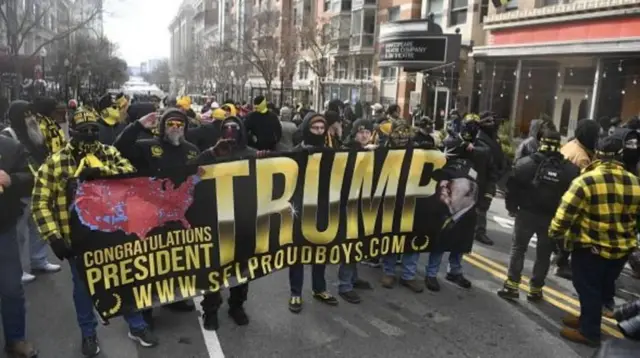
Trump said he would pardon those convicted in the 2021 riots. In his speech, he said these people did nothing wrong. Outside the Washington, D.C. jail, where defendants suspected of participating in the 2021 Capitol riots are held, a large number of supporters braved the cold and waited for nearly a day. When they heard Donald Trump announce at the Capital One Arena that he would soon sign a pardon for the "hostages" on January 6 in the Oval Office, the crowd cheered. "Freedom!" a woman shouted. People at the scene believed that the defendants could walk out of the prison gates within hours of the pardon being signed. Trump characterized those imprisoned for storming the Capitol as "political prisoners" and promised to pardon them, but it has not yet been clarified whether the pardon will include those convicted of violent attacks. "We will release great hostages... Most of them have done nothing wrong." Trump told supporters at the scene.
He then returned to the White House and signed an executive order formally pardoning about 1,500 supporters of the Capitol riot. In addition to the pardons, Trump also commuted the sentences of 14 individual convicted people, including leaders of the extremist groups Proud Boys and Oath Keepers. Among those pardoned and commuted was Stewart Rhodes, who was sentenced to 18 years in prison for conspiracy to rebel.
Critics say pardoning the rioters sends the wrong signal and views the large number of police officers injured that day as a betrayal.
Former House Speaker Nancy Pelosi called it "a stunning insult to our justice system."
Anti-immigration
In addition to energy, Trump's executive order also declared a national emergency at the southern border of the United States in order to mobilize federal resources and troops to support border enforcement.
Trump signed an order ending the humanitarian parole program implemented by the Biden administration, which allowed immigrants from Cuba, Haiti, Nicaragua and Venezuela to enter the United States for humanitarian reasons. This means that hundreds of thousands of people who could have obtained temporary residence will face an uncertain future.
More widely watched is Trump's proposal to limit the automatic citizenship rights of children born in the United States, which is guaranteed by the 14th Amendment to the U.S. Constitution. The proposal is expected to face legal challenges because it involves fundamental constitutional principles. He also canceled the Biden administration's launch of the CBP One application, which allowed nearly 1 million immigrants to enter the United States legally and apply for work permits.
"These policies are not just an attack on undocumented immigrants, they are an attack on all people seeking a better life," immigrant rights advocate Emily Rapp told the BBC.
Administrative Reform
As supporters watched from the stadium, Trump signed an executive order that would "put a regulatory freeze on the bureaucracy to stop it from issuing more rules" until the government is fully in control. The president signed the executive order and held it up to the crowd.
He then signed an executive order freezing federal hiring, excluding the military and some other categories, again until the government is "completely under control." Each signing was met with loud cheers. "Can you imagine Biden doing that? I don't think so," Trump said.
Trump also signed an executive order to establish the Department of Government Effectiveness (Doge). A reporter asked the former president whether Tesla CEO and close ally Elon Musk would have an office in the White House.
Trump responded that Musk would receive an office area that could accommodate about 20 employees to serve the new government agency.
Separately, Trump signed an executive order aimed at stopping the "weaponization of the government" against political opponents and calling for a review of law enforcement and intelligence operations under the Biden administration to identify any abuses and recommend appropriate corrective measures.
Legislative victory
Meanwhile, on Capitol Hill, Republicans had their first legislative victory. The Senate passed the Laken Riley Act by a vote of 64 to 35. The bill will go back to the House for a vote. Lawmakers will have to vote on a revised version before sending it to President Trump's desk, where he will likely sign it. This will likely be seen as his first legislative victory.
The bill is named after Laken Reilly, a 22-year-old nursing student who was murdered by an illegal immigrant in Georgia in February 2024. The bill aims to strengthen enforcement against illegal immigrants, especially those who have been accused or convicted of theft-related crimes.
The Senate has since approved Marco Rubio as Secretary of State, with Rubio being confirmed by a unanimous vote of 99 to 0.
Rubio emphasized at the hearing that China is "the most powerful and dangerous neighboring adversary this country has ever faced." He pointed out that the 21st century will be defined by the US-China relationship.
“They have elements that the Soviet Union did not have. They are a technological competitor, an industrial competitor, an economic competitor, a geopolitical competitor, and now a competitor in every area. It’s an extraordinary challenge,” he said.
Rubio cited the global challenges he faces, including the war in Ukraine, continued violence in the Middle East and China's aggression against Taiwan.
“Without major changes, we could be facing a conflict with China within a decade,” he said.
Rubio told reporters as he left the Senate chamber that he was pleased with the outcome and called it a "huge honor" as he was the first official in Trump's Cabinet to be confirmed for the position.
Withdrawal from international organizations
Finally, at Capital One Arena, Trump signed an executive order announcing the United States' withdrawal from the Paris Climate Agreement and another executive order notifying the United Nations of the decision.
In his speech, Trump emphasized that the agreement had an adverse impact on American industry, while countries such as China continued to emit greenhouse gases without constraints.
According to the agreement, the withdrawal executive order signed by Trump will take effect after formal notification to the United Nations, which is expected to be completed within one year.
Subsequently, Trump signed an executive order to formally initiate the process of withdrawing from the World Health Organization, arguing that the organization performed poorly during the COVID-19 epidemic and was subject to improper political influence from China.
Trump pointed out that the United States provides about 18% of the funding to the WHO each year, while other countries such as China contribute much less than that. He believes that the unequal payment structure is unreasonable. "Wow! This is a big move!" Trump could not hide his pride when signing it.
He claimed that the United States bears a much higher proportion of membership dues than others: "They are desperately begging us to come back!" This statement suggests that he may return to the organization in the future.
other
Other executive orders signed by Trump include:
1. The Gulf of Mexico is renamed the "Gulf of the United States": Trump ordered the Secretary of the Interior to rename the "Gulf of Mexico" to the "Gulf of America."
2. Denali restored to its old name: Trump ordered Alaska's Denali to be restored to Mount McKinley in honor of the 25th president of the United States who advocated tariffs. Obama renamed it Denali to respect the name of the indigenous people during his tenure.
In addition, he has mentioned policies before, but has not yet acted on them:
1. Tariff threats: Trump has not yet imposed additional tariffs on Canada and Mexico, but said they may be implemented on February 1, and ordered a review of "unfair trade practices" with China, Canada, and Mexico. He previously threatened to impose a 25% tariff on Canada and Mexico and a 60% tariff on Chinese goods.
2. Release of Kennedy assassination files: Trump said he would declassify confidential documents on the assassination of Kennedy in 1963 and the assassinations of Robert Kennedy and Martin Luther King in 1968.
3. Establishing a “Bitcoin Strategic Reserve”: Trump supports cryptocurrencies, and the price of Bitcoin has risen by 30% since his election. It is speculated that he may promote the establishment of a federal “Bitcoin reserve” as a “permanent national asset.”


Comments
Post a Comment