Liang Wenfeng, founder of DeepSeek: From quantitative funds to chatbot investors
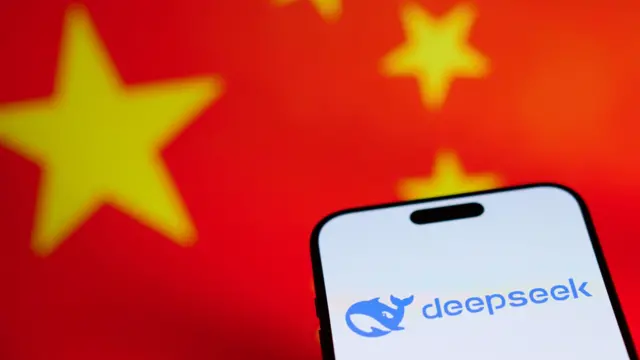
China’s latest AI chatbot, DeepSeek, has rocked the tech world and quickly replaced ChatGPT as the most downloaded free app in the US, making its founder, billionaire Liang Wenfeng, an overnight celebrity.
The low-cost chatbot, which was launched last week and reportedly developed with a budget far smaller than rivals, has stunned Wall Street and sent rivals scrambling to catch up.
U.S. President Donald Trump also immediately expressed his views, calling it a "wake-up call" for American businesses.
“More like a geek than a boss”
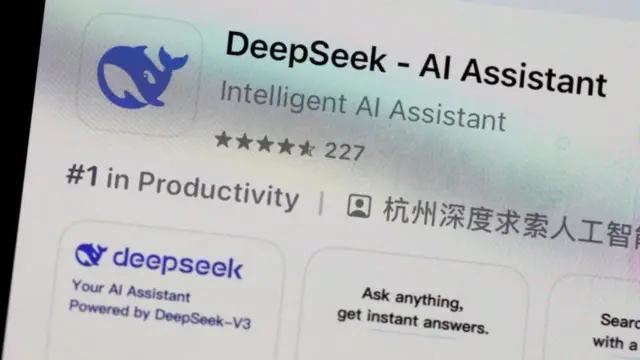
DeepSeek was founded by Liang Wenfeng in December 2023 and released its first large-scale AI language model the following year. Not much is known about the 40-year-old entrepreneur. He was born in Zhanjiang, Guangdong, a southern Chinese city, and graduated from Zhejiang University with a major in electronic information engineering and computer science.
According to an article in technology media 36Kr, people familiar with him said he was "more like a geek than a boss."
Mr. Liang rarely makes public appearances or gives interviews, but now he has become an international focus because of DeepSeek.
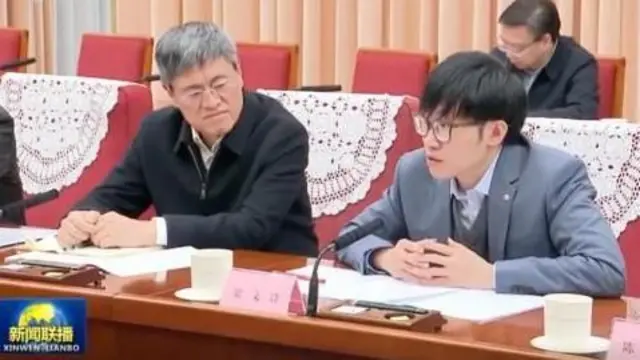
He was the only AI leader selected to attend a public entrepreneur meeting with Li Qiang, the country’s No. 2 leader. Business people were told by Zhongnanhai to “focus on breakthroughs in key core technologies.”
Unlike many American AI entrepreneurs from Silicon Valley, Liang also has a background in finance. He is the CEO of a hedge fund called High-Flyer, which uses AI to analyze financial data to make investment decisions, known as quantitative trading.
In 2019, "Huan Fang Quantitative" became China's first quantitative hedge fund to raise more than 100 billion yuan.
At Magic Square Quant, Liang Wenfeng made money by using AI and identifying algorithmic patterns that could affect stock prices. His team is skilled in using the H800 chip produced by AI chip designers and recent Wall Street darling Nvidia to trade stocks. In 2023, he launched DeepSeek, announcing his intention to develop human-level artificial intelligence.
Liang Wenfeng is said to be personally involved in DeepSeek's research, using proceeds from hedge fund trading to pay top AI talent high salaries. The company has PhDs from top Chinese schools such as Peking University, Tsinghua University and Beihang University, rather than experts from American institutions.
Similar to TikTok's parent company ByteDance, DeepSeek is known for offering top-tier salaries to AI engineers, with employees working out of offices in Hangzhou and Beijing.
In an interview with Chinese media last year, Liang Wenfeng said that his core team "has no returnees, all are local talents... We must cultivate top talents ourselves."
Liang Wenfeng also stressed that China's AI industry "cannot always be a follower."
He added: “We often say there is a one to two year gap between China and the US in AI, but the actual gap is between innovation and imitation. If this doesn’t change, China will always be a follower.”
When asked why DeepSeek’s model surprised so many in Silicon Valley, Liang responded, “Their surprise stems from seeing a Chinese company join their game as an innovator, not just a follower, which is what most Chinese companies are used to.”
What is DeepSeek's competitiveness?
DeepSeek said its model R1 was developed based on existing technology and open source software, which is free for anyone to use and share. However, WIRED magazine reported that Liang's hedge fund company Magic Square Quant has hoarded a large number of AI-based chips, namely graphics processing units (GPUs). According to estimates by MIT Technology Review, the number of chips he obtained is between 10,000 and 50,000.
These chips are critical for building powerful AI models that can perform a wide range of human tasks, including answering basic questions and solving complex mathematical problems.
In September 2022, the United States announced a ban on the sale of these high-performance chips to China, which Liang Wenfeng pointed out in an interview with Chinese media that this was a "major challenge."
The main AI models in the West are estimated to use 16,000 specialized chips. But DeepSeek says its AI model R1 uses only 2,000 of these chips, along with thousands of lower-grade chips, making its product cheaper.
According to the developers, the chatbot cost just $5.6 million to build, while OpenAI, the makers of ChatGPT, spent $5 billion last year.
Some, including U.S. tech billionaire Elon Musk, have questioned the claim, arguing that restrictions prevent the company from disclosing how many advanced chips it actually uses.
But experts say Washington's ban presents both challenges and opportunities for China's AI industry.
"It forces Chinese companies like DeepSeek to innovate, allowing them to do more with limited resources," Marina Zhang, associate professor at the University of Technology Sydney, told the BBC.
She added: “While these restrictions pose challenges, they also inspire creativity and resilience, consistent with China’s broader policy goal of achieving technological independence.”
China, the world's second-largest economy, has invested heavily in big tech sectors - from batteries to power electric cars and solar panels to artificial intelligence technology.
Making China a technological superpower has long been an ambition of President Xi Jinping, and Washington’s restrictions are a challenge Beijing needs to meet.
Mixed reviews
The launch of DeepSeek triggered a sell-off in major U.S. technology stocks. When the U.S. market closed on Monday, Nvidia's stock price had plummeted 17%, with a market value loss of $600 billion. According to Bloomberg, this was the largest drop in the history of the U.S. stock market.
Venture capitalist Marc Andreessen said on social media X that he saw the emergence of DeepSeek-R1 as "AI's Sputnik moment," referring to the artificial satellite launched by the Soviet Union.
But this Chinese app has also caused concerns among many people.
"I still think the truth is somewhere beneath the surface," senior analyst Gene Munster told the BBC, referring to DeepSeek's disclosed financials. He also questioned whether the startup received subsidies and whether its reported figures were accurate.
“This chatbot is too good to be true.”
Australian Science Minister Ed Husic pointed out the safety risks of the product. He told the Australian Broadcasting Corporation: "There are many questions that need to be answered over time about quality, consumer preferences, data and privacy management. I will be very cautious. These issues need to be carefully weighed."
Last week, OpenAI's Sam Altman and Oracle's Larry Ellison joined Trump in announcing a joint project, Stargate, which pledges up to $500 billion in private investment in America's AI infrastructure and the creation of 100,000 new jobs by building data centers in Texas and elsewhere.
As DeepSeek becomes another strong player in the AI race, some experts believe the company's sudden emergence could raise questions about the United States' dominance in AI and the scale of its planned investments.


Comments
Post a Comment