"This should be the safest airspace in the world" The Washington plane crash has raised questions among aviation experts
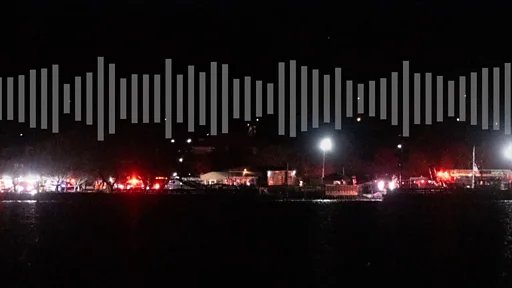
- Rachel Looker, Sean Seddon
- BBC reporter
The aviation industry is struggling to understand how a passenger plane and a military helicopter collided fatally in mid-air in what one expert described as "the most tightly controlled airspace in the world."
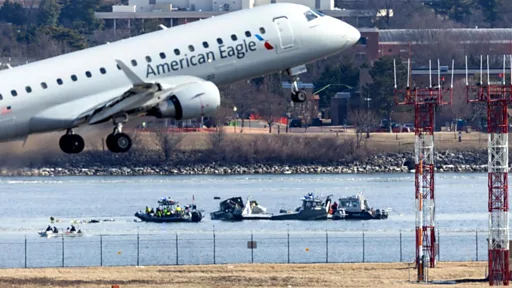
A U.S. Army Black Hawk helicopter with three crew members on board collided with an American Airlines passenger plane carrying 64 passengers and crew just seconds before it was scheduled to land at Washington's Reagan National Airport.
Two planes collided and crashed into the icy Potomac River on Wednesday night (January 29).
The exact cause of the accident remains unclear. The U.S. National Transportation Safety Board, which is investigating the crash, said officials will issue a preliminary report within 30 days.
According to the BBC's US news partner CBS, search and rescue teams recovered the flight data recorders, commonly known as "black boxes", from the wreckage on Thursday. These devices will help investigators determine the cause of the accident.
The final conversation between the helicopter and the tower
The airspace over Washington, D.C. is strictly restricted to protect national security and core U.S. government buildings.
Commercial flights are prohibited from flying over the Pentagon, the White House and other historic landmarks.
However, the airspace still has a lot of air traffic. Jim Brachle, an aviation lawyer who has handled many lawsuits related to jets and Reagan Airport, told the BBC that the area is frequently visited not only by commercial flights but also by private planes and helicopters, which are often used to transport senior officials and politicians to and from sensitive locations.
"The routes in and out are very narrow and crowded, with too many planes, so many planes are squeezed into a small space," he said.
Jeff Guzzetti, a former US Federal Aviation Administration and National Transportation Safety Board aviation accident investigator, told the BBC that the helicopter appeared to be in communication with the control tower before the accident. He noted that air traffic controllers had pointed out that the American Airlines plane was flying towards the helicopter.
"The helicopter pilot responded that he had seen the aircraft and was going to maintain a visual distance from it, but the accident occurred shortly afterwards. So there are a lot of questions about what exactly the helicopter pilot saw at the time?" said Guzzetti.
Dangerous helicopter routes
Todd Inman, one of the five board members of the National Transportation Safety Board, said Washington, D.C., is a "unique environment" because helicopter flights are restricted to certain areas.
"If you look at Washington, D.C., there are a lot of helicopters flying low over the area, so there is a clear system in place for that," he said.
Inman was unable to provide a specific altitude at which the helicopter was flying before it collided with the American Airlines plane.
Jim Bracker, who has handled numerous lawsuits involving jets and Reagan Airport, told the BBC the key question that remained to be answered was why the two planes ended up in the same airspace.
"One of the things that's special about Reagan is that it's close to the river. Also, there's a helicopter route that crosses the final approach path for aircraft, and that route usually flies at an altitude of 200 feet or less," he said.
Bracker noted that the helicopter's flight path intersected the plane's approach path.
"That means two different types of aircraft could be in a very small space with very little safety separation between them," he said. "If one of them is flying a little bit lower and the other is a little bit higher, they could end up in the same location."
The “intersection point” of the aviation system
Aviation consultant Philip Butterworth-Hayes said the accident occurred at the "intersection of multiple aviation systems," including civil and military systems, as well as airport-specific flight procedures.
"It's right at the border of three or four aviation systems, and accidents tend to happen most easily at these borders," he added.
However, British aviation expert John Strickland believes that the large amount of commercial aviation traffic in the area cannot fully explain why the fatal mid-air collision occurred.
He pointed out that in addition to Ronald Reagan National Airport near the city center, there is also Washington Dulles International Airport and Baltimore Airport a little further away.
“Flight flows must be regulated to ensure safe spacing between aircraft. This is similar to the situation in London, where flight flows between Heathrow, Stansted, Gatwick and London City airports need to be precisely managed.”
“So from that perspective, Washington, D.C., is not that different from London or New York… This airspace environment is not entirely uncommon.”
Butterworth-Hayes further pointed out: "This is the most strictly controlled airspace in the world. Here the US government and the civil aviation system coexist, and Reagan Airport is even owned by the government, which is extremely rare."
"Given the many security and public safety agencies operating in this area, it should be the safest airspace in the world."
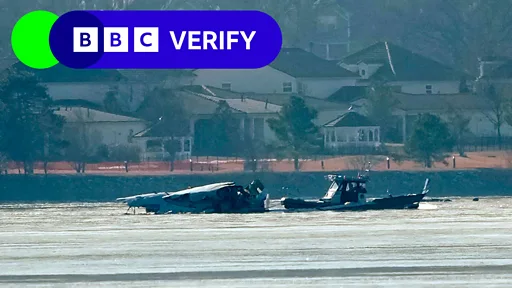
The picture shows the plane appearing on the radar system
The last fatal U.S. air accident involving a commercial aircraft was in February 2009. Officials and experts stress that such incidents are extremely rare because of strict safety restrictions on all types of flights.
CBS News obtained footage from air traffic control agencies showing the two planes involved in the accident were clearly visible on radar systems accessible to controllers.
Sources contacted by BBC News appeared to confirm that the helicopter had been in contact with air traffic control on the ground at the airport.
The air traffic controller asked the helicopter if it could "see" the passenger plane and asked it to "pass from behind". In the subsequent audio, the controller seemed to realize that the collision had occurred and began to guide other aircraft to nearby airports.
Butterworth-Hayes said a mid-air collision like this one requires multiple factors to go wrong.
He said that in order to fly in civilian airspace, the military helicopter had to be equipped with a transponder, a device that sends alerts to surrounding aircraft indicating its location.
This means that the two aircraft should have been able to detect each other and air traffic control would have given instructions while the aircraft protection safety devices operated separately.
"In this case, two different systems should have been able to separate the two aircraft."
The Black Hawk helicopter, which belongs to Company B, 12th Aviation Battalion, took off from Belvoir Army Base in Virginia and was taking part in a training exercise.
Helicopter crew 'very experienced'
U.S. Defense Secretary Pete Hegseth said the helicopter's crew was "quite experienced" and was taking part in its annual night flight training.
Retired U.S. Air Force Colonel Cedric Leighton told CNN it was normal for such military aircraft to conduct night training in the area, especially to ensure pilots were proficient in the instrument operations required for night flying.
He noted that one of the unit's duties is to transport high-level personnel within Washington, D.C., but there were no officers on board at the time of the incident because it was a training flight.
He added that the unit's pilots must become proficient in flying in the busy airspace over Washington, D.C., and "train to avoid accidents like this."
Butterworth-Hayes said only experienced pilots could train in such busy airspace.
"Whether it's training on a new system or piece of equipment, we need to know what systems the pilot has enabled on the helicopter, whether they have all the safety equipment turned on, or whether they are testing a new flight procedure or route."


Comments
Post a Comment