Analysis: The impact and signal of the US Pentagon's inclusion of Tencent in the military-related list
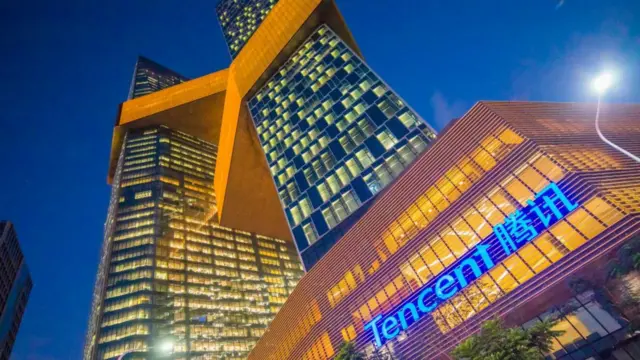
- Lu Jiahong
- BBC Chinese reporter
At the beginning of 2025, the U.S. Department of Defense announced that it would add Chinese gaming and social software giant Tencent Holdings and global battery manufacturer leader CATL to the "military enterprise blacklist", which triggered a strong backlash from China and attracted attention from the technology community. This move is also considered to be another step in the fierce confrontation between U.S. and China in technology and trade retaliation, with strong political implications.
According to Section 1260H of the U.S. National Defense Budget Act for Fiscal Year 2021, the Pentagon publishes a list every year, listing "Chinese Military Companies" (CMC) that operate directly or indirectly in the United States. This list includes companies that the Pentagon believes have "direct or indirect" cooperation with the People's Liberation Army in the context of China's "military-civilian integration." In this latest list, the outside world paid special attention to the Chinese Internet giant Tencent, which was listed for the first time. Since Tencent's basic business covers games and digital commercial social services (such as WeChat payment and communications), it has always been regarded as not closely related to military development, so its listing has triggered widespread discussion in the technology community.
Craig Singleton, a senior researcher at the Foundation for Defense of Democracies, an independent think tank based in Washington, told BBC Chinese that Tencent's global influence extends across social media, online games, digital payments and cloud services, making it an important promoter of Beijing's technological authoritarian agenda and posing significant risks to U.S. national security.
He pointed out that under Chinese law, many large Chinese companies, including Tencent, must cooperate with China's military and intelligence security agencies, and China's military-civilian integration strategy blurs the boundaries between civilian companies and military entities.
Singleton believes that Chinese government agencies have access to a large amount of sensitive financial data on platforms such as WeChat and WeChat Pay. He stressed that Tencent's Internet security strategy is almost certainly being used by China's intelligence and military agencies.
However, Xu Tianchen, a senior economist at the Economist Intelligence Unit (EIU), told BBC Chinese that the decision to include foreign companies in this list mainly relies on the discretion of defense officials, usually lacks concrete evidence, and is quite arbitrary. He believes this is a political statement by the Biden administration. "This is like the United States' recognition of these companies. Congratulations on your success in attracting our attention."
He added that although being included on the list would not have much impact on Tencent because these companies do not rely on the US market and rarely receive orders from the US military, it could still have an indirect impact on the decision-making of other US government agencies, and some US companies might choose to avoid doing business with companies on the list.
It is worth emphasizing that while being included on the list will not immediately trigger US sanctions, major investors are usually required to divest. In order to attract investors, CATL is preparing to list on the Hong Kong Stock Exchange, but being included on the list is expected to be affected. With the release of this announcement, Tencent's share price in Hong Kong plummeted by 7.3%, losing about HK$275 billion (US$35.4 billion) in market value, while CATL's share price in Shenzhen also fell by 2.8%, reducing its market value by about RMB 32.2 billion (US$4.4 billion).
In response to the Pentagon's move, Tencent and CATL both criticized it, calling it a "mistake" and expected to appeal. Tencent also emphasized in its response that "we are not a military company or a military supplier."
The Chinese Ministry of Foreign Affairs also quickly expressed its position, criticizing the Biden administration's unreasonable suppression of Chinese companies at a press conference, and emphasized that "China has always firmly opposed the US's generalization of the concept of national security and the establishment of various discriminatory lists" to curb China's high-quality development.
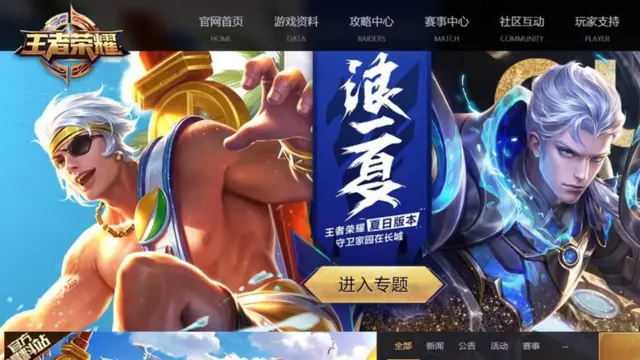
The Pentagon’s “blacklist” points to “military-civilian integration”
According to the US Department of Defense, this list is based on the statutory requirements of Section 1260H of the National Defense Authorization Act for Fiscal Year 2021. The Pentagon has begun to publish an updated list of "Chinese military companies" operating directly or indirectly in the United States.
The Pentagon pointed out that the update of this list is an important effort to continue to counter the "military-civil fusion" strategy of the People's Republic of China (PRC). They believe that China's military-civil fusion strategy continues to support the modernization goals of the People's Liberation Army (PLA) of the Communist Party of China. These commercial entities appear to be "civilian companies" on the surface, but according to the 1260H Act implemented in 2021, the Department of Defense is instructed to legally identify the Chinese Communist Party's "military-civil fusion contribution" entities operating directly or indirectly in the United States.
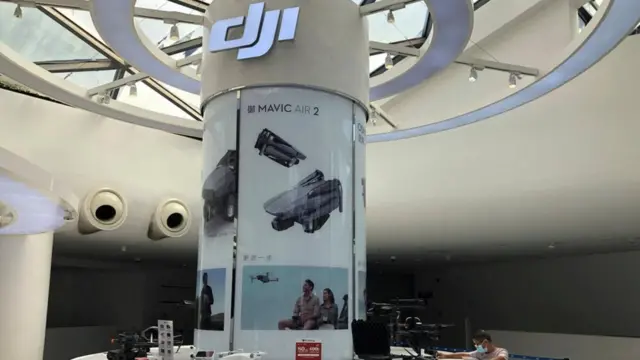
There are 134 companies on the latest list in January 2025, including China Ocean Shipping Group and Tencent, which were newly listed this year, and DJI, a global drone manufacturer that was on the list last year.
The US-China tech war expands from hardware to services
The Pentagon's decision comes just two weeks after Donald Trump was elected president, and the political implications of the move have attracted attention. Some analysts pointed out that the update of the list, which includes Tencent, a major Chinese telecommunications company, and CATL, a rapidly expanding battery manufacturer, seems to be Washington's strategy to continue to crack down on the development of Chinese companies in the US-China trade war, aiming to restrict Chinese companies that are seen as security threats.
John R. Moolenaar, Republican chairman of the House China Committee, expressed support for the Pentagon's actions on social media, saying "these loaded guns cannot be allowed to threaten our economy and security."
Analyzing from the perspective of US-China relations, Gary Ng, senior economist for Asia Pacific at Natixis, told the BBC that this incident shows that the scope of the US-China technology war is expanding. Mr. Ng pointed out that in the past, when the United States defended "national security", it mainly focused on semiconductor products and hardware. However, this time the Pentagon included Tencent in the blacklist, showing that the United States' goals have expanded to China's digital service sector, including artificial intelligence (AI) technology.
As the world's largest game publisher, Tencent has a huge demand for high-end AI chips in game development, and AI chips are the main battlefield of the US-China technology war. Nikkei Asia analyzed that Tencent's inclusion in the Pentagon's blacklist may affect its future development plans and make it more difficult for it to purchase artificial intelligence semiconductor products produced by the US company Nvidia, because Tencent is highly dependent on AI technology in game development and improving network service functions.
Craig Singleton told reporters that this latest list reflects the priority of the United States' national security, especially at the intersection of economic and digital security. By listing companies such as Tencent, the United States emphasizes that national security is not only about physical threats, but also covers the use of data, technology and infrastructure. This list is intended to protect key areas, prevent companies related to China's military and intelligence agencies from entering, and ultimately protect the sovereignty of the United States in a rapidly changing geopolitical landscape.
However, Shanghai-based technology analyst Li Tongyu told the BBC that he did not think Tencent's inclusion on the list was directly related to the US-China competition in AI and national security issues. He stressed that Tencent is not a military company or supplier, and pointed out that "the appearance of this list is somewhat inappropriate." He also mentioned that the list seems to be used as a strategy to deter Chinese companies, with political over commercial considerations. He questioned that if Tencent really violated US commercial interests, why did the US Trade Representative's Office remove it from the notorious market list shortly after it was included in the US Department of Defense's blacklist?
In addition, he also mentioned that China's semiconductor equipment manufacturer "SMIC", which was listed by the Pentagon in January last year, won a lawsuit in the United States and was removed from the blacklist in December last year. Xiaomi was also included in the list in January 2021. Two weeks later, it sued the U.S. Department of Defense in the U.S. District Court for the District of Columbia, and eventually reached an out-of-court settlement with it and was removed from the blacklist.
How big is the impact on Tencent?
Once blacklisted, US companies will be reluctant to do business with these companies because it may limit future contracts with the US Pentagon. In other words, the US Department of Defense will not be able to purchase goods or services from companies on the list. The impact of the blacklist may also include legal proceedings and potential impact on international business operations, although these companies can still conduct other business activities outside of US military contracts.
Xu Tianchen of the Economist Intelligence Unit stressed to the BBC that although the direct impact of being included in the sanctions list is relatively limited, because these companies do not rely on the US market and do not have much business dealings with the US Department of Defense, the list may have indirect effects. For example, other US government agencies may choose not to cooperate with these companies because of the list, or US companies may also avoid transactions with these companies based on the list.
Last week, the social media account Yuyuan Tantian under China's official media CCTV pointed out that the inclusion of these companies in the list may have an invisible impact on their international image. These companies may become the focus of US export control in the future, further exacerbating market anxiety.
Analyst Wu Zhuoyin believes that the US move to include Chinese companies in the list is essentially "a political gesture, and it also concerns the US narrative strategy of how to define 'national security' in the future."


Comments
Post a Comment