As “TikTok refugees” flock to another Chinese platform to avoid talking about politics, can Xiaohongshu handle this wave of traffic?
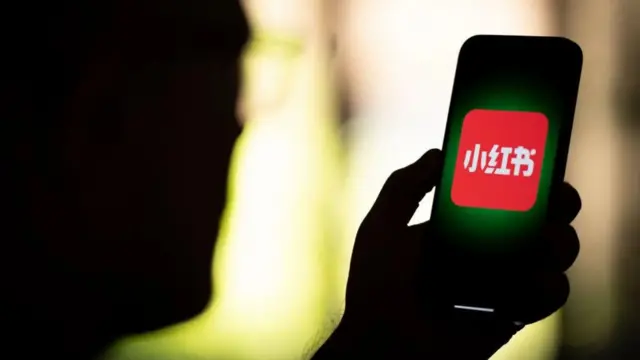
As the threat of a delisting of TikTok, the international version of Douyin, approaches on January 19, a large number of American netizens flocked to the Chinese lifestyle sharing platform Xiaohongshu this week. In just a few days, Xiaohongshu topped the US app store rankings.
Currently, Xiaohongshu has accumulated more than 100 million downloads on Google Play, and Sensor Tower, an app data research company, estimates that Xiaohongshu's downloads in the United States this week increased by more than 200% year-on-year and 194% from the previous week. It is worth noting that Lemon8, another social media app under ByteDance, also experienced a similar surge last month, with downloads jumping 190% in December to about 3.4 million times.
But other American social media have rarely benefited from the migration of 170 million TikTok users.
TikTok will face a deciding point in its fate in the United States on January 19, and there are no signs that the ban against it may be reversed.
The United States has previously made it clear that there are only two fates for this software in the United States: sell it or remove it from the shelves. TikTok has repeatedly stated that it will not sell its business in the United States. Its lawyers said that the "no sale or no sale" approach will harm the freedom of speech of the platform's 170 million users in the United States.
Previously, the US government pointed out that TikTok may monitor or steal American people's data and questioned its relationship with the Chinese government. In the past few years, TikTok's parent company ByteDance has tried its best to make TikTok a company independent of its Chinese department and appointed Singaporean Chinese Zhou Shouzi as TikTok's CEO, but it still failed the US government's trust test.
After years of debate over the TikTok bill surrounding data security, some American netizens voted with their feet and took the initiative to visit Xiaohongshu, which has only one Chinese headquarters and does not distinguish between the international and Chinese versions. On this platform, some people said:
"Our government has been saying that China is stealing our data, so TikTok needs to be banned. But we want to say that compared to the United States, we trust China more to get our data. Here is my data, come on, China, take it.
Carnival without walls
Since the beginning of this century, China has gradually established a firewall. Internet users need to build a VPN or use more sophisticated technology to change their IP address or leave the country to use international software such as Google, YouTube, and Instagram. Without bypassing the firewall, users in China cannot directly download TikTok, and users in the United States cannot download Douyin.
In short, the communication between netizens from different countries is separated by the Internet firewall. But in the past few days, as millions of netizens flocked to Xiaohongshu, the "wall" of the Internet was briefly broken and gradually became an Internet carnival.
The topic "TikTok" has received 1.56 billion views and 9.76 million discussions on Xiaohongshu. "TikTok refugees" has also received 340 million views and 7.438 million discussions.
"I never thought that one day I would be able to create a social networking app without walls," Ms Luo, who works in Shanghai, told the BBC.
"I'm touched that no matter what your political stance is or where you're from, we can all share pictures of cats together."
Marcus Robinson, a fashion designer from Virginia, USA, said he created his own Xiaohongshu account this weekend to promote his clothing brand and keep himself in touch with fashion trends.
Robinson told the BBC he was only "slightly hesitant" to accept the terms and conditions for using the app before signing up and starting to use it because they were written in Chinese.
“I didn’t really get to read them, so that was a little worrisome for me,” he said. “But I took a chance.”
Other new Xiaohongshu users told the BBC that they recently spent much more time on Xiaohongshu than on TikTok.

Sydney Crawley, a technology worker in Tennessee, told the BBC: "Even if TikTok survives, I will continue to use the account I created on Xiaohongshu."
Ms Crowley said she gained more than 6,000 followers within 24 hours of creating her Xiaohongshu account.
“I will continue to experiment with the Xiaohongshu account and see what new connections, friendships or opportunities it can bring me.”
Ms. Fotheringham, a cafeteria worker, said that Xiaohongshu "helped me understand China and the Chinese people."
“I can see things now that I never saw before,” she said. “It’s so interesting to learn about the culture, life, school, everything of ordinary Chinese people.”
Mr Robinson, the designer, said that so far the Xiaohongshu community had been “very enthusiastic” about his arrival.
Noting the surge in Xiaohongshu users and the demand for Chinese language learning, language learning software Duolingo has also recently focused on promoting its Mandarin business on its social accounts.
In addition, the Shanghai Municipal Government Information Office also expressed its welcome to "TikTok refugees" through its official Xiaohongshu account, but the post was deleted just a few hours after it was published. Many Chinese government media have also posted articles to celebrate the popularity of Xiaohongshu.
Xiaohongshu faces challenges in avoiding political issues
Xiaohongshu has always avoided political issues and created a life atmosphere for differentiated competition. Previously, Xiaohongshu's reviewers also said that the focus of their work is to reduce the debate and risks brought about by political issues and maintain the long-term harmony and stability of the online community.
Still, in Taiwan, public officials are banned from using the Chinese software due to alleged security concerns.
But after "TikTok refugees" flocked to Xiaohongshu, the Chinese-centered text review system was unable to cope.
A live broadcast of a "Chinese class" dialogue room attracted more than 300,000 viewers. Hundreds of American netizens analyzed and denounced US tax policies in the room. Americans in police uniforms also joined in posting. Under a post on Xiaohongshu complaining about overtime and pay cuts, a user with an IP address in the United States directly replied, "You should go on strike." This was unimaginable in the previous operating environment of Xiaohongshu.
In addition, Xiaohongshu has long positioned itself as a female-friendly platform. According to the analysis of Xiaohongshu data analysis platform "Qiangua", in 2024, female users of Xiaohongshu will account for nearly 80%. Gender-related issues that are currently silent in China's mainstream media, including topics such as female labor, single women, and even lesbians, can easily gain a lot of attention on Xiaohongshu.
This situation has intensified after TikTok refugees flocked to Xiaohongshu, with a large number of posts containing rainbow flags and lesbianism emerging. Although Xiaohongshu has not responded to this yet, some netizens have expressed concerns about such an open language environment.
"I don't know how many days this will last. The review will definitely respond. It would be best if Xiaohongshu is not banned," said Ms. Luo.


Comments
Post a Comment