Focus after the Shigatse earthquake in Tibet: Difficulty of earthquake rescue in plateau, quality of housing in towns and villages, and impact on tourism
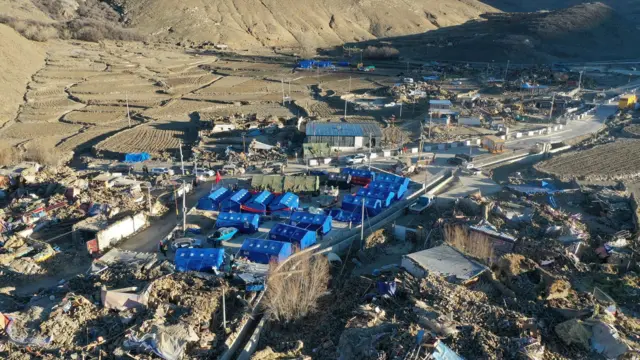
"The worst-hit area is 4,300 meters above sea level, with temperatures below 10 degrees Celsius at night. There is a lack of oxygen in high altitude areas, so rescue is very troublesome and quite annoying." Wang Xue'e, head of Tibet Aneng Logistics, told BBC Chinese reporters on January 8.
Within 24 hours after a 6.8-magnitude earthquake struck the holy Tibetan city of Shigatse, her logistics company had transported more than 30 truckloads of supplies from Lhasa to the disaster area overnight. Currently, there are several trucks on standby to receive support materials from all over China and transport them to the disaster area.
"Blankets, heating equipment, food, oxygen concentrators, tents and clothes are the most relief supplies we have received. Some roads in the worst-hit areas are not easy to travel, but most of the roads are smooth and trucks can barely drive."

Plateau earthquake: Rescue operations face low temperature challenges
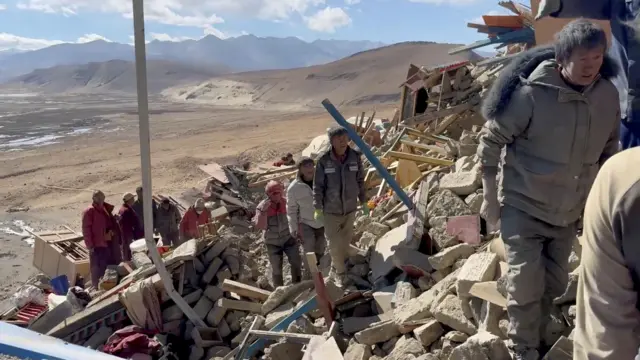
At around 9:00 a.m. local time on Tuesday (January 7), a 6.8-magnitude earthquake struck Shigatse, Tibet, with the epicenter located in Dingri County, Shigatse City, close to the Nepal border, and the focal depth was 10 kilometers. After the earthquake, there were several aftershocks in the area, and the tremors were also felt in Bhutan, Nepal and northern India on the other side of the Himalayas.
Due to its location on a plateau, Tibet's weather is characterized by a large temperature difference between day and night, which has caused considerable trouble for local rescue work. According to the China Meteorological Administration, when the earthquake occurred, the temperature in Dingri County, the epicenter, was -12.2°C. Within three days after the earthquake, the local minimum temperature is expected to drop to -18°C, and the maximum temperature will fluctuate between 0°C and 7°C.
Such extreme climate leaves a very short window for rescue operations, and rescue operations are also very difficult.
Within 24 hours after the disaster, netizens in many parts of China relayed lists of materials needed in the disaster area. In the information exchange group of Zhuoming Disaster Information Service Center established after the Wenchuan earthquake, in the list of material shortages issued by Shigatse, electric blankets, tents, sleeping bags and other cold-proof and warm materials were the most in demand, and the quantity was often counted in the hundreds.
In addition, several heads of charitable organizations in Lhasa also told the BBC that they are currently actively raising funds in preparation for post-disaster reconstruction.
During the interview, the reporter found that the Internet signal in Tibet was unstable, and it was difficult to guarantee the use of common communication platforms in Chinese urban areas such as WeChat and Tik Tok. Communication still relied heavily on mobile phone dial-ups.
According to Chinese media reports, the Dingri earthquake has so far caused at least 126 deaths, 188 injuries, more than 3,600 houses collapsed, and 46,525 people were relocated.
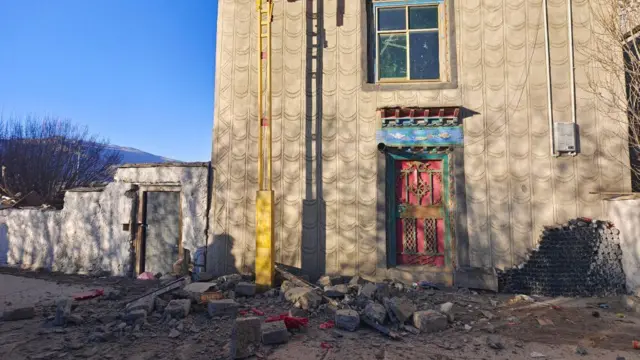
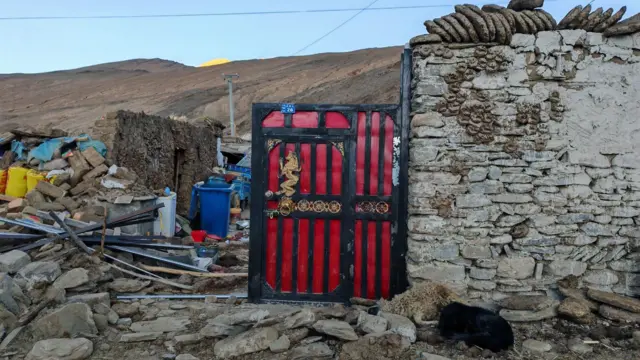
No buildings collapsed in the new county town, but the earthen walls of the towns and villages collapsed seriously
According to the China Earthquake Center, the average altitude within 5 kilometers of the epicenter is about 4,259 meters, which is a plateau earthquake. Chen Meijun, associate professor and senior geological engineer at the Northern University for Nationalities, told Chinese media that the difference between plateau and plain earthquakes is mainly reflected in the impact on human life. Plateau areas have a small population, low urban building density, and low floors, so the damage caused is relatively small; in plain areas with relatively soft foundations, loose geological structures will amplify the earthquake effect, and coupled with dense populations and dense buildings, the damage caused is even greater.
Su Dechen, a researcher at the Institute of Geology, Chinese Academy of Geological Sciences, also told Chinese media that although the magnitude of this earthquake was not large, it caused relatively serious casualties. This may be because the local houses were of poor quality, dilapidated, and had unreasonable structures, which led to the collapse of houses and casualties.
A woman living in the new town of Dingri County, Shigatse, told the BBC that she did not see any collapsed houses in the county, and there were items scattered inside the third floor, but the first floor was "not bad."
"It was the houses in the towns that collapsed, but we were fine because our house was newly built and the structure was better," she said.
Sun Shihong, a researcher at the China Earthquake Networks Center, told Chinese media that the local houses in Shigatse are mainly made of earth, stone and wood, and have poor earthquake resistance. As the altitude is over 4,000 meters, local residents often thicken the roofs of their houses, which results in the heavier roofs and stone walls pressing down when the houses collapse, making it difficult for residents to escape.
Staff from the Dingri County Emergency Management Bureau and the Cuoguo Township government under its jurisdiction also pointed out to Chinese media that there was a serious collapse of local houses, all of which were earth walls.
Tourism industry worried
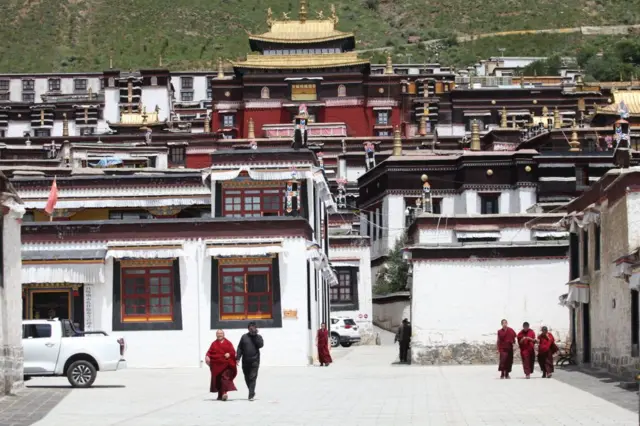
There are currently two Mount Everest base camps in China, both located in Dingri County, Shigatse, the epicenter of the earthquake. Shigatse has therefore become a paradise for outdoor enthusiasts.
In recent years, there has been a surge in outdoor sports in China, and going to snow-capped mountains for vacation and celebrating the Spring Festival has become an extremely popular choice. As a must-stop on the Mount Everest tourist route and with two airports, the city of Shigatse generally sees a small peak in tourists during the Spring Festival.
After the earthquake, a tour guide in charge of Tibet tourism told the BBC that although "it is not known when the Mount Everest route will be reopened, tourists do not need to worry. Tibet is very large and the routes near the Yarlung Zangbo River are very safe."
As the Spring Festival approaches, the tour guide does not want to give up business during the peak tourist season. In the past 24 hours, she has posted three travel routes to Mount Everest via Shigatse on the lifestyle sharing platform Xiaohongshu, repeatedly emphasizing that "they are all very safe" and hoping that the influx of tourists will arrive as expected.
On Xiaohongshu, there are many posts asking when the Everest route will be reopened, most of which are from tourists who plan to travel together during the Spring Festival. In addition, some tourists in Shigatse recorded in detail the situation in the mountainous area when the earthquake occurred. The photos showed that the road was buried by rubble, but some buildings were still strong, with only a few bricks and stones falling from high places.
"I'm not sure if business will be good this year, but I will try my best to ensure the safety of my guests," the tour guide said.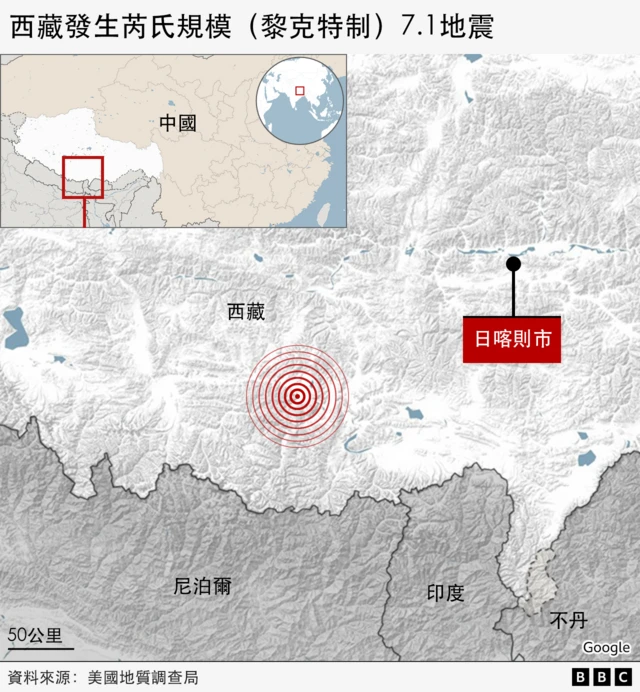


Comments
Post a Comment