Five years after the epidemic: From "dispersed China" to "ideal China", the survival and dreams of intellectuals "run" overseas
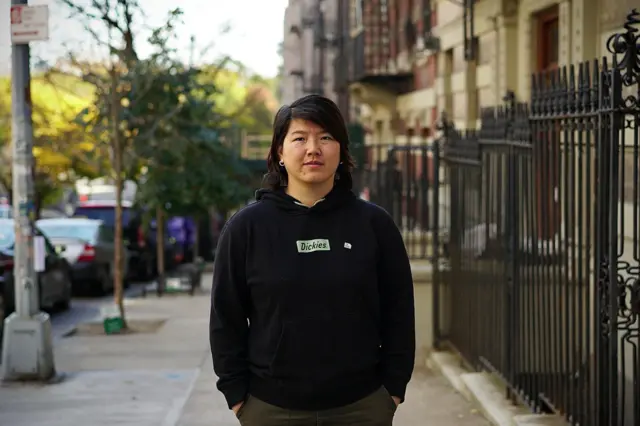
- Chang Siying
- BBC Chinese
Five years have passed, but the memory of the Wuhan lockdown is still vivid, and the COVID-19 pandemic has become a watershed that changed the fate of countless people.
The same goes for Li Maizi. She had not originally planned to leave China, but the epidemic pushed her to do so.
At the peak of the epidemic in 2022, she was still working at an overseas study agency in Beijing. One day, in order to get a 24-hour nucleic acid test certificate to enter the company, she and her colleagues searched for two hours to find the nearest testing point, and there was a three-kilometer-long queue in front of them. At that time, the prevention and control policies changed overnight, and the 72-hour test certificate they originally held was invalid, which caught everyone off guard.
"I think this country has gone crazy," she told BBC Chinese.
35-year-old Li Maizi is one of China's well-known "Feminist Five". She has organized street actions many times to speak out for women and the LGBT community, and has been frequently suppressed in recent years.
She said that the increasing levels of social control during the epidemic highlighted the rapid concentration of power and the further weakening of the tightened civil society, which forced her to finally make the decision to leave China. In July 2023, she arrived in the United States and currently lives in New York, becoming one of the large number of Chinese intellectuals and middle-class people who emigrated overseas after the epidemic.
Five years later, the far-reaching impact of the epidemic is still fermenting. From strict information blockades to unpredictable city closures and quarantines, coupled with the continued economic slowdown, more and more people have left.
In the United States and other places, new "diaspora Chinese" communities are rapidly forming. Activists like Li Maizi are working hard to restart their lives in a foreign land and build the "ideal China" in their hearts.
The last straw for leaving China
Li Maizi said that during the epidemic, her roommate was taken away by the police for being involved in the "Sitong Bridge Incident". She was implicated and was closely monitored by the police, and her movements were restricted.
In October 2022, on the eve of the 20th National Congress of the Communist Party of China, the authorities strengthened the blockade, some cities forced everyone to test and isolate, food and medicine were in short supply, and public resentment was boiling. On the 13th, on the Sitong Bridge in Beijing, a protester hung a banner that read "No nucleic acid, but food; no Cultural Revolution, but reform; no blockade, but freedom; no leader, but votes", which was called the "Sitong Bridge Incident".
More protests followed across the country, including the highly publicized "White Paper Movement."
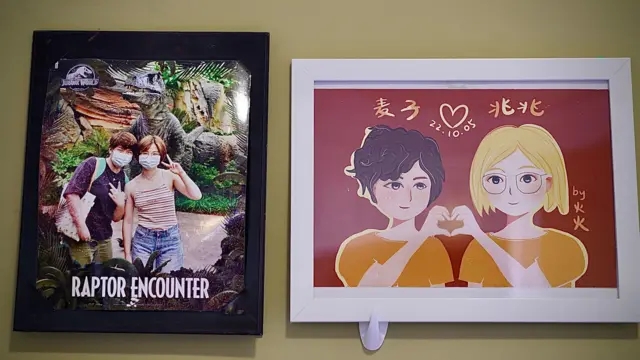
At a time when civil society was under suppression, the "last straw" that forced Li Maizi to leave China was a private incident.
She planned to marry her girlfriend in the summer of 2022. After the news got out, she was harassed by the National Security Bureau.
Li Maizi was still at work when she received a call from the National Security Bureau in the corridor, informing her that she was not allowed to get married. She "completely collapsed" and asked the other party in tears: "I don't even go out on the street now, why can't I get married?"
Chinese law does not recognize same-sex marriage, so they registered their marriage online in Utah, and originally planned to invite 100 people to the wedding, but in the end they kept it low-key and changed it to an online ceremony with only more than 30 people in attendance. Later, Li Maizi followed her partner who was studying abroad to leave China and settle in New York.
"The police have extended their hands into my personal life, and they are omnipresent," she said. As an activist, she had long been aware of the dramatic changes that have taken place in Chinese civil society in recent years, but she had not expected that her personal life would also become part of the control of those in power.
China lifted its lockdown at the end of November 2022, and a large number of people left China. Some people felt the political pressure, while others despaired of the weak economic recovery. In the second quarter of 2023, GDP grew by only 0.8%, and the youth unemployment rate announced in June reached 21.3%, a record low.
Many people use stay, business or work visas to emigrate overseas; others take risks and sneak into the United States through Central and South America in a so-called "line-walking" method. According to reports , in the first nine months of 2023, the U.S. Border Patrol arrested 22,187 Chinese citizens entering from Mexico. This is 13 times the number in the same period of 2022.
A report by investment immigration company Henley & Partners shows that China will have 13,800 high-net-worth individuals leaving the country in 2023, making it the country with the largest outflow of high-net-worth individuals (people with assets of at least US$1 million) in the world; it is expected that 15,200 people will leave in 2024, setting a record high.
The company analyzed that this trend began after the epidemic situation improved in the second half of 2022 and was evident throughout 2023. Uncertainty about China's economic development trajectory and geopolitical tensions are the primary reasons for these wealthy people to leave their homeland, and the United States is the preferred destination.
Wu Muluan, associate professor at the Lee Kuan Yew School of Public Policy at the National University of Singapore, told the BBC: "China has exposed a major public governance crisis during its efforts to control the epidemic. Some policies were not formulated based on science, but were promoted more through power, leaving the people at a loss."
He said that the Chinese authorities were not transparent in handling information such as the number of deaths, and they arbitrarily blocked communities and restricted personal freedoms during the epidemic. They also did not reflect thoroughly after the epidemic, causing many people to feel despair about China's system and therefore choose to leave.
"Whether it is intellectuals, high-net-worth individuals or the grassroots people, they have all experienced the worst political and economic times. They are anxious about the future and no longer have confidence."
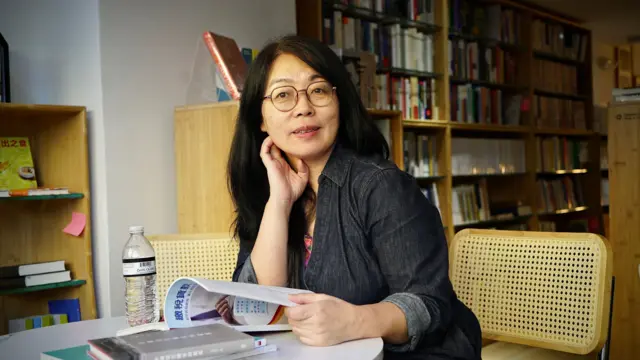
Jiang Xue, a veteran journalist from Xi'an who is currently in Washington, was forced to flee China after her experiences during the pandemic.
On April 4, 2020, the Qingming Festival, the State Council of China announced a national mourning event to express condolences to the people who sacrificed their lives in the fight against the epidemic. Jiang Xue wrote a commentary article "On the National Day of Mourning, I Refuse to Join the Chorus" and published it on the Internet. Not long after, the police came to summon her and took her to the police station to take a statement.
"That was actually a normal comment. I wrote about it before, but no human rights lawyers came to my house," Jiang Xue told BBC Chinese.
Jiang Xue entered the industry in the late 1990s as a reporter and commentator for a well-known market-oriented media. At that time, market-oriented media in China was booming, and she conducted investigative reports on social issues such as forced demolition, corruption, and the environment. In 2014, she became an independent journalist.
By the end of 2021, Xi'an officials, concerned about hidden transmission chains in the city, ordered 13 million residents to stay home. The sudden ban caught many residents off guard. Before the city was closed, panic buying occurred in local supermarkets and markets, and the communication system on mobile phones crashed, preventing tens of thousands of people who needed to travel from commuting.
Jiang Xue wrote "Ten Days in Chang'an" based on her experiences in the ten days before and after the city was closed and released it on social media.
"It is December 31, 2021. It is the last evening of the old year, and dusk is about to fall. Looking out from the balcony, the streets are empty. The city no longer has the hustle and bustle of the evening, and the deathly silence makes people feel absurd and a little scary." The article begins.
After the release of "Ten Days in Chang'an", there was a huge response. Jiang Xue said that the WeChat public account received tens of thousands of messages. But within a few days, the article was blocked by various platforms.
Jiang Xue said that she had touched on sensitive issues before the epidemic, and might have been more critical of those in power than in "Ten Days in Chang'an", but times have changed and the red line seems to have changed.
"I am not a dissident, but a journalist. This is my profession and my duty. If I think something is important, I will report it," she said. Not only herself, but many of her friends also feel that "after the compression of the overall environment, life is very painful and depressing."
Jiang Xue, who was almost 50 years old, finally chose to leave.
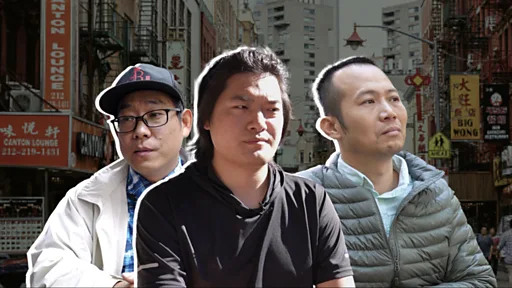
The determination and struggle of building a "dispersed homeland"
Bookseller Yu Miao also decided to leave.
He moved from Shanghai to the United States and opened a Chinese bookstore, Monsoon Books, in Washington, D.C. While studying, he applied for an outstanding talent visa and planned to stay for a long time.
The independent bookstore was originally founded in Shanghai. Since Yu Miao took over, it has frequently held lectures and forums, and is known as a "spiritual landmark." However, over the past decade, lectures have been cancelled under pressure, and the bookstore's business has continued to shrink.
In 2018, the bookstore was forced to close and Yu Miao was banned from engaging in commercial activities in the country. A year later, he went to the United States to study and lived in Florida with his family.
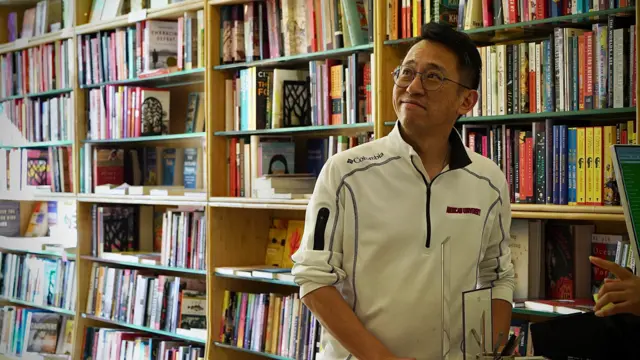
He originally planned to return to China after completing his master's degree in political science to continue publishing or charity-related work, but found that he could not go back.
In early 2022, Yu Miao's wife Xie Fang returned to Shanghai to take care of her mother, during which time she experienced the city lockdown. When she was about to return to the United States after the lockdown was lifted, she was intercepted by border officials at the airport, who demanded that she be allowed to leave the country in exchange for Yu Miao's return to China for investigation.
"They accused me of publishing political commentary articles under a pseudonym here (in the United States), which discussed Chinese policies and Chinese leaders," Yu Miao told BBC Chinese.
The incident was reported by the Wall Street Journal and other international media. A few months later, Xie Fang was released and reunited with her husband in the United States.
But Yu Miao realized that "returning to China has become unlikely."
"This place (the United States) may give us better possibilities, but more importantly, the social environment we originally lived in made us increasingly disappointed, and even gave us a growing sense of insecurity."
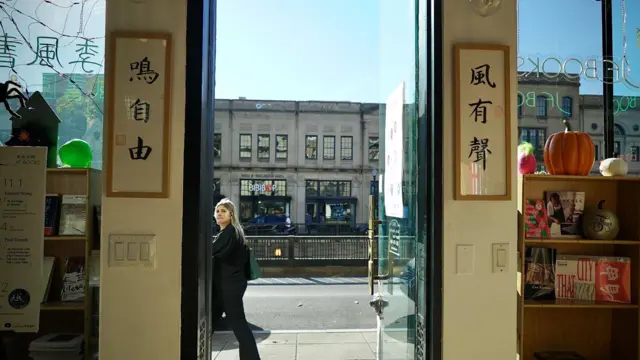
Since its opening in September last year, Monsoon Bookstore has held dozens of lectures, about five per month, including those by Minxin Pei, a political science professor at Claremont, California, Chinese-American writer Ha Jin, and Wu Guoguang, a professor at the Stanford University Institute of International Studies.
Many people come here because of its reputation. One day in November, a Chinese student drove for more than four hours from New Jersey to the bookstore. As soon as he entered the door, he greeted the clerk warmly and said that he had visited Monsoon in Shanghai and was very glad that it could be "reborn" in Washington, and hoped to donate to support the operation of the bookstore.
Yu Miao said that the open and diverse Washington has given Monsoon Book Garden enough tolerance, and the community's recognition of Chinese bookstores is better than he imagined. The landlord added a five-year priority bidding right to the lease.
"I feel like I'm beginning to be accepted by society, which is a little different from what I imagined before I came here," Yu Miao said. "When you feel accepted by society as a whole, you will have a different understanding of the country and identity."
Yu Miao is ready to stay for a long time. In this era when bookstores are entering a cold winter and electronic reading is on the rise, he signed a ten-year lease. He has not yet reached a break-even point, but he is confident that he can attract donations from institutions or the public and develop the bookstore into a non-profit organization.
He said that the bookstore fills some gaps in the community and hopes to become a "dispersed home" for overseas Chinese, providing them with a pillar of spiritual life, while at the same time extending greater possibilities and "making some contributions to the formation of a better China."
When he said these words, his expression was firm and confident, but deep down in his heart, there were conflicts and struggles.
"Is this an illusion? I don't know for sure," Yu Miao said. "This is an imaginary space. I give it meaning by myself. In fact, it is just an expectation, an expectation without basis."
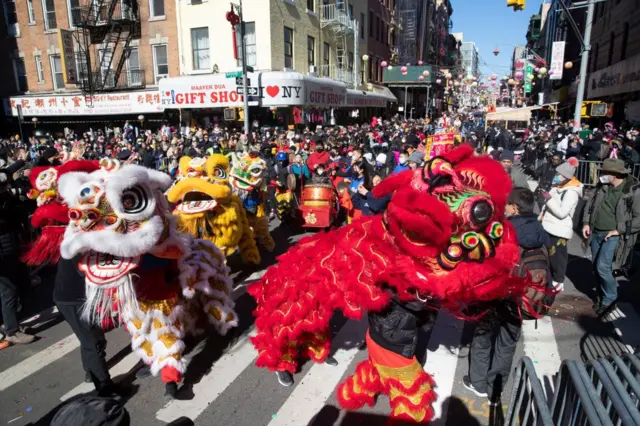
Li Maizi, a feminist activist in New York, is rebuilding her life and community in her own way.
One evening in November, in an unremarkable industrial building in Manhattan, the heart of New York, a burst of singing came. A group of young voices sang in Chinese: "Which rose is without thorns? The best revenge is beauty, and the most beautiful bloom is counterattack."
The song is "Rose Boy" by Taiwanese singer Jolin Tsai, written for the queer community. The Beijing Queer Choir, the only LGBT choir in China that was able to perform publicly, also sang this song. Here, the singers are a group of international students and new immigrants from China, led by Li Maizi.
On the eve of Women's Day in 2015, Li Maizi and four other young women were detained for organizing an anti-sexual harassment event. In the detention center, she adapted the famous song "Do You Hear the People Sing" into Chinese, which helped her get through more than a month of difficult days.
Li Maizi said she hopes singing can bring strength and comfort to other Chinese people living abroad, and perhaps it can also become a way to have a long-term impact on China.
“If you want the movement to be sustainable, people must be sustainable first,” she said. “We can also be political, but we use singing to unite people first.”
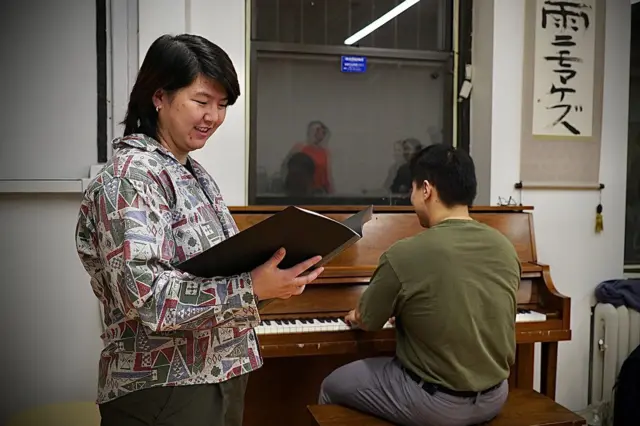
She first registered an account on social media, and when her fans accumulated to a certain level, she began to post messages to recruit choir members, and now there are more than 30 people. She regularly organizes rehearsals and leads the choir in performances. In some special periods, they express their stance through singing.
What to do if she has no money? She paid for it out of her own pocket. What to do if she doesn't have a group logo? Ask Chinese designers for help. She always seems to find a solution. She has led the choir in more than a dozen rehearsals, and she paid for most of the rehearsal expenses, which cost about 1,500 US dollars; designing the group logo cost about 2,000 RMB.
She plans to expand the choir to a hundred people, organize her own choral performances, develop it into a non-profit organization in the future, and apply for art funds to support operations.
“As a woman, I have no country,” said Li Maizi, who drew inspiration from British writer Virginia Woolf and believed that social movements need not be confined to the country or even to identity politics.
With the experience of registering marriages in the United States, she also helps LGBT people in China to handle marriage business. On the one hand, it alleviates the economic pressure, and on the other hand, it indirectly influences the awareness of LGBT in Chinese society.
“If I can help a couple get married, I can make some impact in the country,” she said.
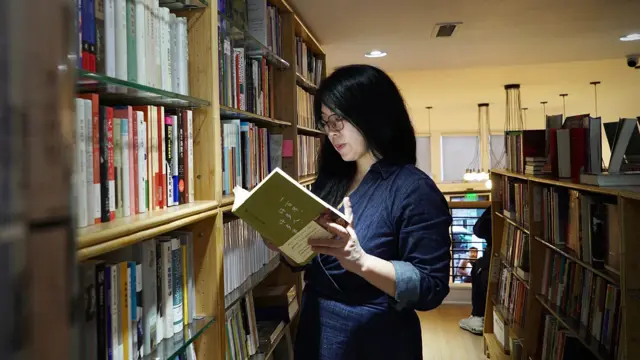
For veteran independent journalist Jiang Xue, she feels that "dispersion" is an appropriate word to describe this era.
She said that China was still booming and there were still many opportunities and attractions in society. But after the epidemic, the economic downturn made life difficult for ordinary people, so she chose to leave, and she herself was "unknowingly on the way to separation."
She was planning to stay for a long time. She said that if she couldn't go back, she would just settle down.
"I'd better settle my life first. I don't want to make myself miserable," Jiang Xue said. She spoke with sadness, and occasionally looked out the window, lost in thought.
She originally worked in the Chinese media industry and did not have much savings. After arriving in the United States, she relied on editing and research work to make a living, "all kinds of odd jobs." She said self-deprecatingly: "No matter what grand narrative, I have to live first and then talk about ideals."
She has not stopped observing and writing, and still pays attention to Chinese social issues, including youth unemployment and various problems caused by economic downturn in recent years. She also has a great interest in Chinese civil society, and has done some reviews and research, and has published articles on the "White Paper Movement" under her name.
"I will continue to pursue my ideal, if there is still such an ideal," Jiang Xue said.
She once read the book "Using News to Influence Today" by the famous journalist Li Datong, which inspired her and clarified her original intention of working in the media. However, gradually, the space for investigative reporting in China has become narrower and narrower, and many outstanding journalists have been forced to change careers, and even their own lives have been in jeopardy.
"I just feel unwilling to accept it," she said.
When she arrived in the United States, due to geographical limitations, she lost the "being on the scene" required for journalism - she could not interview the interviewees face to face, but she gained a more relaxed source of information and "freedom from fear."
However, she always felt that being forced to leave her homeland in middle age was "a shameful and humiliating thing." In addition, her parents are already old, and Jiang Xue said that the guilt she felt towards her family was an unspeakable pain.


Comments
Post a Comment