Five years after Wuhan’s lockdown: the lost truth and the collective trauma of the “epidemic generation”

- Ye Jingsi
- BBC Chinese reporter
Five years have passed, and Wuhan has long since returned to its bustling status quo, but the memory of the 76-day lockdown is still deeply buried in the hearts of residents.
"Many sequelae, or 'secondary disasters' caused by the epidemic have not yet been taken seriously, which makes me feel very powerless," recalled Wuhan social worker Guo Jing.
In December 2019, "unknown pneumonia" appeared in Wuhan and spread rapidly, and was later named 2019 novel coronavirus disease (COVID-19) by the World Health Organization (WHO) . On January 23, 2020, this city with a population of 11 million was locked down.
Guo Jing, 34, was one of the trapped Wuhan residents at the time. With extremely limited freedom of movement, she witnessed shops closing, residents not getting help, and their relatives and friends dying from the virus. "These issues could not be discussed after the lockdown was lifted, and people had to bear them themselves."
The new coronavirus outbreak that started in Wuhan eventually swept the world. WHO statistics show that as of the end of 2024, more than 7 million people had died from the coronavirus worldwide, with more than 120,000 of them in China.
"As the initial epicenter of the epidemic, Wuhan people are still in fear until now." Professor Yang Dali of the Department of Political Science at the University of Chicago has studied the anti-epidemic decision-making process and its impact. He pointed out that the lockdown was a watershed in the lives of many young people in Wuhan and a trauma for China's "new crown generation."
"Five years is not a long time from a historical perspective, but for many young people, five years is a long time."
From "preventable and controllable" to sudden lockdown
It all started on New Year’s Eve 2019. On that day, the Wuhan Municipal Health Commission reported for the first time that 27 cases of “viral pneumonia” had been discovered, but the origin of the virus was still unclear at the time.
Evidence of the ability of the unknown virus to spread from person to person continued to emerge, and hospitals were overcrowded, but Wuhan health officials insisted that the " epidemic is preventable and controllable " and "dealt with the rumormongers in accordance with the law" who tried to alert the public. As the Spring Festival approached, the provincial government continued to hold large-scale group worship performances, and even the grand occasion of the "Ten Thousand Family Banquet" in Baibuting Community appeared .
Guo Jing, who lives in Wuhan, noticed signs such as the tight sales of cold medicines in pharmacies, but she recalled: "At the time, I didn't know how serious this matter would develop."
The residents of Wuhan were still unaware that the crisis had broken out and were still purchasing New Year's goods and preparing for the Lunar New Year as usual.
Li Zi (pseudonym), 24, was a preparatory student at an Australian university at the time and took advantage of the summer vacation in Australia to visit his family in Wuhan. He said he heard some rumors the night before the city was closed, but "I didn't really take it too seriously."
"Then I even went out to eat hotpot with my friends that night, and it felt pretty normal, although there were fewer people."
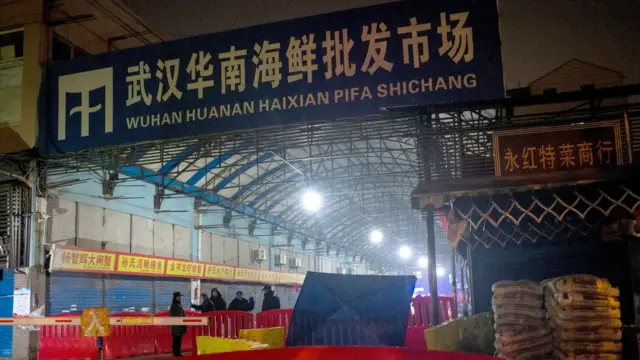
"Then my mother also went to the Huanan Seafood Market to buy seafood, but the (taxi) driver said something seemed to have happened at the market, so my mother didn't go there."
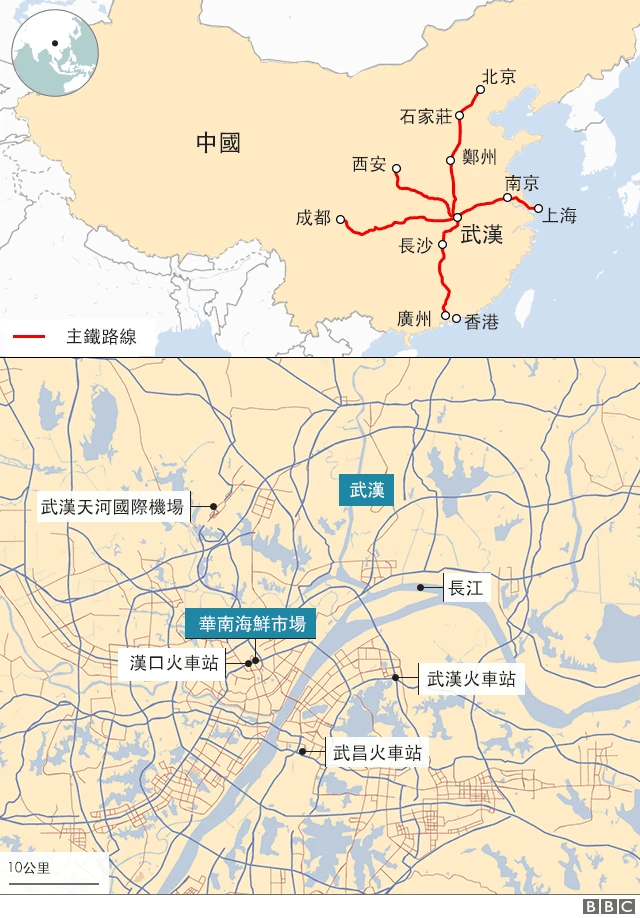
Health officials investigating the first cases traced them to the Huanan Seafood Wholesale Market. Soon after, it became known that wild animals were being sold at the market—the virus that caused the outbreak was later named SARS-CoV-2, a close relative of the 2003 SARS virus, which was thought to have spread to humans through wild animal meat .
Just as people were still immersed in the festive atmosphere, a single order completely changed the fate of Wuhan.
At 02:30 Beijing time on January 23 (18:30 GMT on January 22), the Wuhan Municipal Government issued the "Notice of the Command Center for the Prevention and Control of Pneumonia Infected by the New Coronavirus (No. 1)" , announcing that public transportation in the city would be suspended from 10:00 am that day, and the channels out of Wuhan would be closed, "Citizens should not leave Wuhan without special reasons." With this, the city began an unprecedented blockade.
Liu Ting, a Taiwanese who runs a tabletop game bar in Wuhan, was trapped in Wuhan and witnessed the city’s darkest moments. One of her friends had the unfortunate experience of having a loved one infected and dying at home.
Liu Ting, 33, said: "At that time, the crematorium was too busy to handle the work and there was no car to pick up the body. The body stayed at home for the whole time... After several days, someone came to pick it up, but they took it away directly and cremated it. The family members could not follow."
"At the time, I thought, how could this happen? My friends were powerless and had no way to solve the problem. They could only wait."
Liu Ting also faced a difficult decision - the Taipei government arranged a charter flight to evacuate Taiwanese residents from Wuhan. At that time, Taiwan had passed Asia's first same-sex marriage law , but it did not cover same-sex couples in mainland China. Liu Ting had no legal basis to bring her partner Yang Xi with her, and ultimately chose to stay in Wuhan.
"I can't just leave my girlfriend here." Now she calls her Madam.
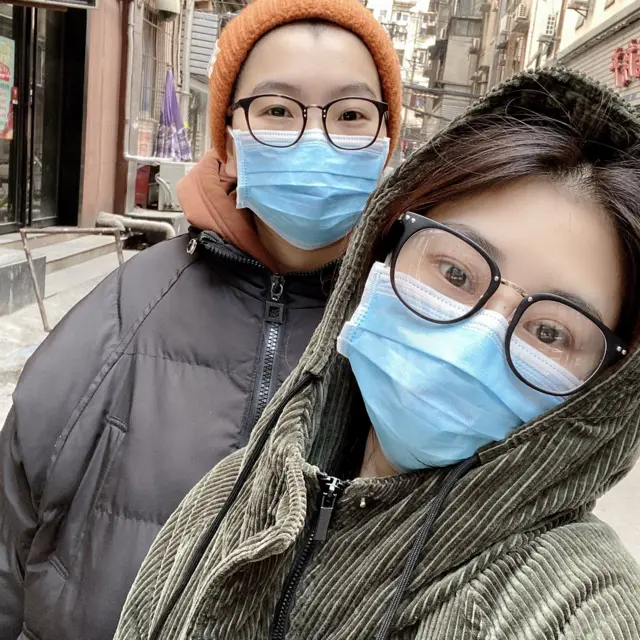
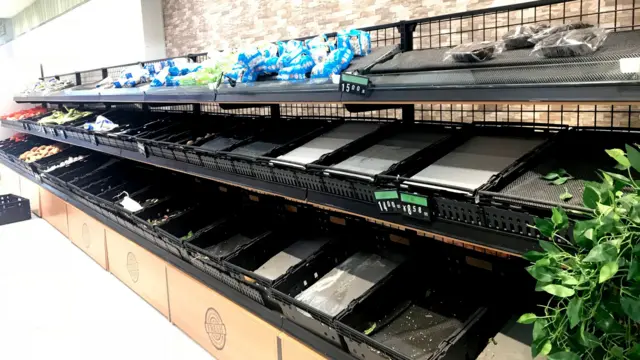
As Wuhan's lockdown measures were gradually tightened, the door of Liu Ting's residence was initially equipped with an alarm by control personnel. Once the door was opened, an alarm would sound. Later, although residents were able to walk to the door of the apartment building, the entire building was sealed with iron sheets.
She recalled her daily life with her partner Yang Xi during the lockdown: At first, they sang and cooked at home, enjoying their leisure time, but soon they became bored and "went crazy". One day in the later stage of the lockdown, there was a protest from downstairs, which then turned into a fight, and Yang Xi was accidentally injured out of curiosity.
"My wife wanted to watch the fun," Liu Ting said. "There was a hole in the middle of the iron sheet so the delivery man could pass the food to you, and some people could go in and out through that hole. She was about to lean out, and then, as soon as she stepped through, she got cut and started bleeding."
"We went to the hospital in the middle of the night, and she was bleeding and bleeding, and there were no extra medical staff to take care of her. We later turned back and bought disinfectant to wash and bandage her body."
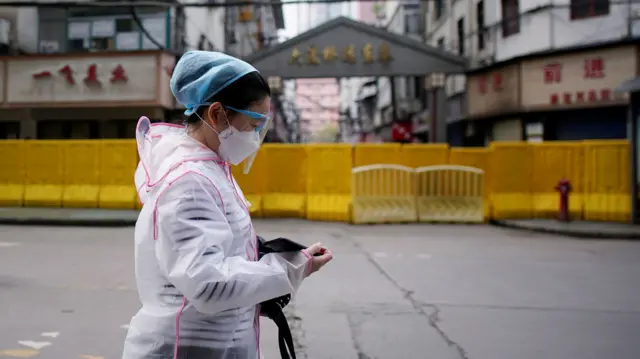
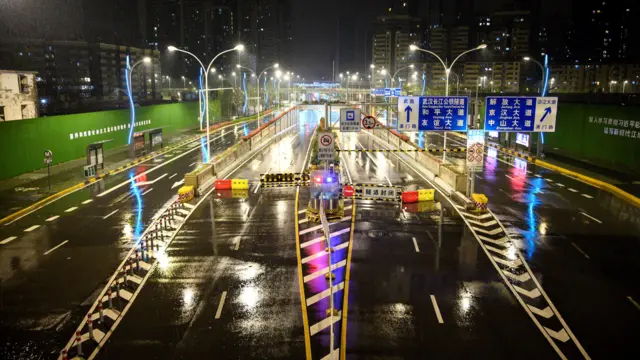
Lockdown experiment: a microcosm of social control
Under strict blockade, some young people in Wuhan have experienced a change in their political ideas.
Li Zi, who was unable to return to Australia to study, began to use the private virtual network (VPN) knowledge he had learned before to "climb over the wall" to watch videos online, trying to understand relevant information about the Wuhan epidemic.
From these videos, Li Zi saw that some residents' doors and windows were welded shut, some personnel implementing the lockdown forced their way into the houses for inspection and disinfection, pushed and beat residents and even the elderly, and some staff members were suspected of arbitrarily withholding food supplies that should have been distributed to residents.
"Those managers are very much like gangsters," said Li Zi.
He posted on WeChat Moments to discuss some of the events that made him angry. Some of his "little pink" friends who hold official positions urged him to "think rationally", but he insisted: "I think this is inhumane."
The authorities have repeatedly "refuted" such online news, but in the subsequent lockdowns in other cities, after irregularities in implementation such as withholding supplies were exposed, the government issued a document prohibiting related behavior.
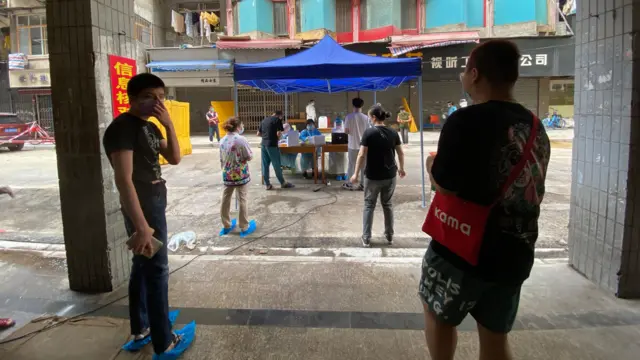
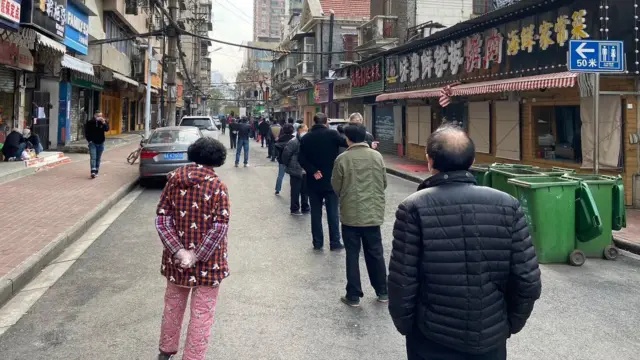
During the lockdown, Liu Ting encountered her first censorship of her posts. "It seemed that it was because I forwarded some WeChat Moments, and I was 'harmonized', which means my Moments were blocked."
One of the posts that caused Liu Ting to encounter online censorship was about hotels in Shanghai and other places refusing to admit people from Wuhan.
"What made me angry at the time was that even though the outbreak originated in Wuhan, it doesn't mean that the people of Wuhan should bear the consequences. He just got sick, and no one wants that to happen!"
"How can you exclude people from Wuhan? This is totally wrong and it's unfair to me."
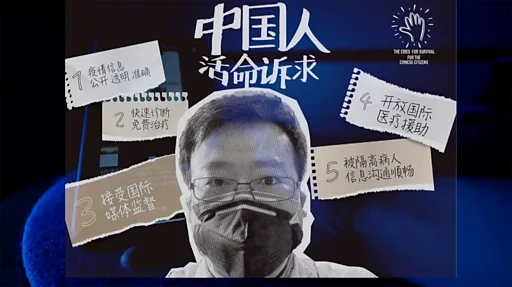
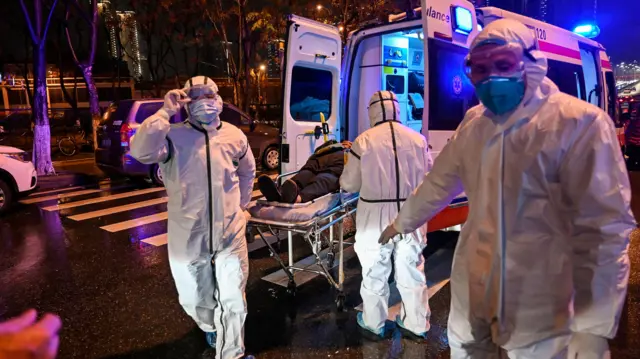
During the lockdown in Wuhan, conflicts between public power and individual rights continued to emerge, and the death of Dr. Li Wenliang shocked the entire city.
As an important "whistleblower" of the COVID-19 epidemic, Li Wenliang was reprimanded by local police for "spreading rumors" for alerting his peers to the unusual epidemic. He was subsequently infected with the new coronavirus while on duty.
On February 7, 2020 , Wuhan Central Hospital announced that Li Wenliang died in the early morning of that day at the age of 34. His father Li Shuying told the BBC Chinese reporter: "I don't think he was spreading rumors. Isn't it a reality now? Isn't pneumonia transmitted from person to person?"
Li Zi, a Wuhan resident, recalled: "I remember being very angry and regretful at the time. He showed a sense of professional responsibility in the face of a public health emergency."
"This made me realize that these people in the system only want to keep their jobs and don't want to get into trouble. It's a completely arrogant bureaucratic style, which makes me very angry."
However, Song Ning (pseudonym), who was working in Wuhan at the time, had a different view. The 30-something tech worker said, "In my heart, I agree with Li Wenliang and some people who really work at the grassroots level, but I don't care much about this kind of thing, because this kind of thing happens over and over again under our system."
"I think this is what happens in this position, it's normal. They will definitely control public opinion first without knowing the situation. I'm used to it."
This article contains content provided by Google YouTube. As these contents use technologies such as cookies, we will ask for your consent before loading any content. You may wish to read the Google YouTube Cookie Policy and Privacy Policy before giving your consent . If you wish to read the above, please click "Accept and Continue".
End of YouTube post
On March 19, 2020, China's National Supervisory Commission published an investigation report . The official Xinhua News Agency quoted the head of the investigation team as saying that the information released by Li Wenliang "objectively played a role in promoting all parties to pay attention to the epidemic and strengthen prevention and control", and recognized that he was "a member of the medical staff who fought bravely, made contributions and sacrificed in the prevention and control of the epidemic."
On the same day, the Wuhan Municipal Public Security Bureau revoked the warning letter to Li Wenliang in accordance with the instructions of the National Supervisory Commission and "solemnly apologized" to his family. The police officers involved were punished with "administrative demerits" or "administrative warnings."
Li Wenliang's last Weibo post announcing his diagnosis of infection was dubbed the "Chinese Wailing Wall" by netizens. Over the past five years, more than a million messages of condolences and appeals have continued to pour in, and have not stopped to this day.
Wuhan social worker Guo Jing said: "I think the lockdown is actually an attempt and an experiment for the Chinese government to strengthen control."
"To what extent can they block it? Maybe this is more terrifying?"
During this "experiment", Guo Jing maintained her spirits by video-calling friends from other places, launching an online campaign against domestic violence during the lockdown, and documenting her lockdown experience by writing a diary, which was later published as a book.
Guo Jing mentioned that she was later "harassed" by the police, but declined to elaborate.
"The lockdown was not traumatic at all... The harassment from the public authorities was traumatic for me."
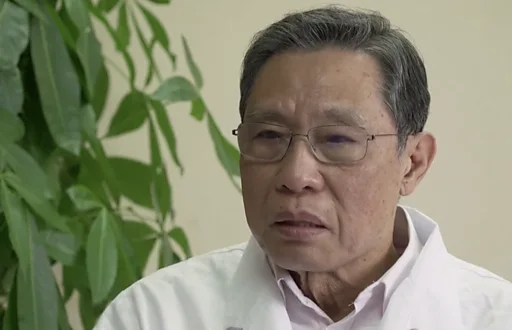
Generation Corona: The Collective Trauma of Young People

On April 8, 2020 , Wuhan was unsealed, but the lockdown was extended to all parts of China. Beijing has been implementing the "zero-COVID" policy for the next three years.
Looking back on this experience, Liu Ting, a Taiwanese from Wuhan, said: "The sudden lockdown of the city really caught us off guard. The outrageous thing is that we never thought it would last so long."
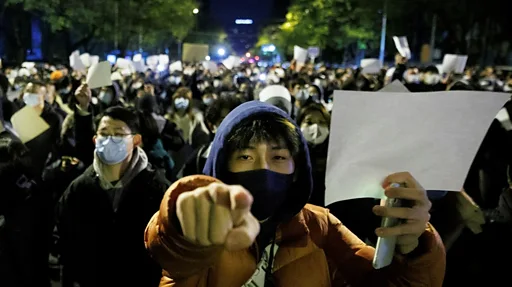
On November 24, 2022, a residential fire in Urumqi, Xinjiang, killed 10 people , which became a turning point. The public generally believed that the strict lockdown measures hindered escape. People took to the streets one after another, holding up white paper to protest, and set off the " White Paper Movement ". Under the pressure of public opinion, Beijing drastically changed its epidemic prevention policy in December and officially abandoned the "zero clearance" route.
At subsequent meetings of the Political Bureau of the CPC Central Committee and even in diplomatic propaganda against the US policy toward China , Beijing repeatedly stressed that "since the outbreak of the COVID-19 epidemic, China has insisted on putting people and life first."
- Two years after the “White Paper Movement”: Overseas Chinese activists continue the movement despite risks
- White Paper Movement Anniversary: Overseas Youth Hope to Build a Dissident Network Outside the Great Firewall to "Seize Public Memory"
- One year since the White Paper Movement: How are the young people who participated in it doing?
- China's 'White Paper Movement' protesters face retribution
- Eyewitnesses of the "White Paper Movement" recount their experiences of being arrested and escaping by chance
- When Halloween becomes a "taboo": Shanghai students are asked not to participate in "unofficial activities"
The lockdown policy has left scars of varying degrees on China's younger generation. Guo Jing said that some of her friends chose to leave China, some for better development opportunities, and some to get rid of the harassment of public power.
Young people who stay in the country are facing new challenges: companies are constantly laying off employees, the youth unemployment rate hit a new high in 2023 , and fierce competition has caused " involution ".
Li Zi, a student in Wuhan, witnessed the " consumption downgrade " after the epidemic: "I just can't go back to the feeling before. It feels like everything has become cheaper. Some brands that used to be very high-end have started looking for anchors to promote their products."
Professor Dali Yang of the University of Chicago is worried about the future of the "new coronavirus generation."
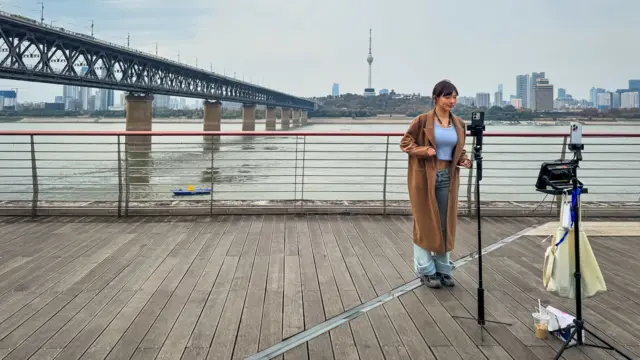
"Young people have been confined to school for several years, and have fewer opportunities to go out for internships and social interactions. The mentality of college students has actually changed quite a bit, right?"
"In this process, if, for example, he drives an online ride-hailing car or something, he is unlikely to acquire new skills, which will have a considerable impact in the long run - including whether he will get married, have children, and a series of other situations."
- Is China's "undergraduate-graduate upside-down" aimed at solving employment problems or upgrading higher education?
- China's economy: Research shows how people's attitudes have changed over the past 20 years
- Amid China's high unemployment rate, the stories of several university graduates whose knowledge is not being used
- “Consumption downgrade” and “middle class poverty”: Phenomena under China’s weak economic recovery after the epidemic
- Chinese young people struggling between "involution" and "lying flat"
- The surge in Chinese “deadbeats” after the COVID-19 pandemic: a story of a “dishonest debtor”
Five years later, Professor Yang Dali believes that open and transparent COVID-19 tracing work can help heal society’s collective trauma, but he observes that China “is not very willing to review this matter and does not encourage everyone to do this.”
"Because this kind of review or research will inevitably touch upon some phenomena, behaviors, and errors in the process of ' dynamic zeroing '."
On the eve of the fifth anniversary of the first cases in Wuhan, the WHO once again urged China to share information and data to assist in tracing the source. The Chinese Ministry of Foreign Affairs responded that it had "shared epidemic information and virus gene sequences with the WHO and the international community as soon as possible, and shared prevention, control and treatment experience without reservation."
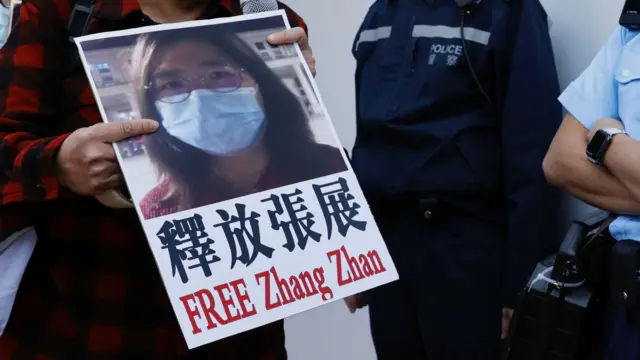
And the public power's control over the narrative of the epidemic continues - citizen journalist Zhang Zhan, who published on-the-ground reports during the lockdown, was sentenced to four years in prison by the court for "picking quarrels and provoking trouble" ; director Lou Ye's Wuhan documentary feature film could not be released in mainland China, and even discussions on social media were censored and blocked.
"The Chinese government has really become very smart now," Li Zi said. "They will stop losses in time, or put out some things, and eliminate some voices."
"In this domestic environment, everyone is more self-interested and less likely to fight for their rights."
Song Ning, who suffers from an immune system disease, has mixed feelings about this period of history. He believes that the lockdown did help Wuhan avoid the "medical resource run" crisis, but he still feels resentful about the authorities' initial concealment.
However, he believes that like most Chinese people, he no longer expects to get an answer and only hopes that the subsequent impact of the epidemic will "pass quickly."
"There is no truth here, and we don't deserve to know the truth. It doesn't matter." There was helplessness in his words.


Comments
Post a Comment