Homeless women in Hong Kong: the “invisible people” on the city’s street corners
- Li Yumeng
- BBC Chinese reporter
- Reporting fromHongkong
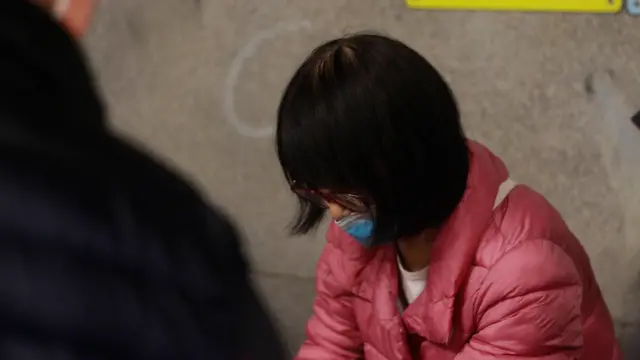
Xiao Xing was a homeless person in Hong Kong before, and had lived on the streets, in chain fast food restaurants, on the beach, etc. Almost four years ago, she was able to live in a hotel under a government-funded program, ending her three-month wandering life.
Xiao Xing heard that the government-funded program would soon end, and he was worried that he would have to go back to sleeping on the streets. "I'm scared to sleep on the streets again," the 62-year-old Xiao Xing told BBC Chinese.
Homeless people are a microcosm of the rich-poor gap in Hong Kong, an international financial center. Female homeless people receive less attention because of their secretive lives.
During the COVID-19 pandemic, the hotel industry was depressed, and the government funded some non-governmental organizations to rent some of them as transitional housing for citizens in need of housing, including many displaced female street sleepers (homeless people). The number of this group has decreased significantly.
After the tourism industry began to recover after the epidemic, the Hong Kong Housing Bureau announced in 2023 that it would no longer accept new applications from non-governmental organizations. Some of the participating organizations currently stated that the funding they received will also expire at the end of 2025.
Concern groups are worried that the number of homeless people, including women, will rebound significantly, and hope that the government will face up to this problem. They believe that the government should not ignore this group again due to the current financial difficulties. Some analysts also warned that the government's next move to crack down on substandard subdivided flats may make the problem of homeless people even worse.
According to data from the Hong Kong Social Welfare Department, the number of registered homeless people in 2022-2023 is 1,441. At the end of 2023, the number of female homeless people was 114, compared to 179 two years ago.
Three months of fear
Because of the failure of her last relationship, Xiao Xing fell into depression and tried to commit suicide. She said that leaving Hong Kong was a way for her to survive. Around 2006, she went to Zhuhai, worked in a restaurant, and was able to rent a room to live alone.
The epidemic caused Xiao Xing to lose her job. With no savings and no relatives, she chose to return to Hong Kong.
After returning to Hong Kong, her life did not improve at all. She had no choice but to become a homeless person. "I was scared every day," she thought again, "Why should I live when life is so difficult?"
When I recall the three months of sleeping outdoors, I still feel scared from time to time.
She once slept in the corridor outside the Tsim Sha Tsui Cultural Center and tried to pick up leftover food from fast food restaurants to fill her stomach. Later, she met a non-governmental organization that provided services to the homeless and got food through the organization's meal distribution.
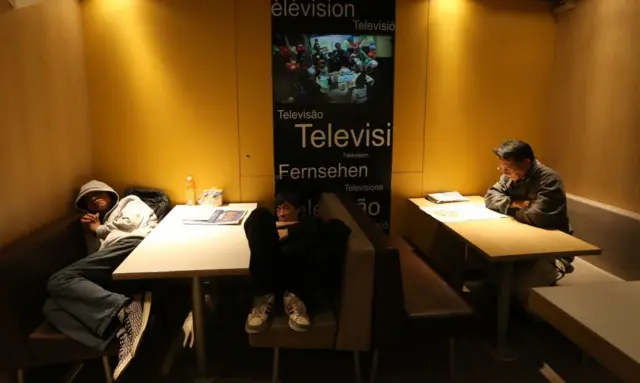
Although there were fewer tourists during the epidemic, there were still some drunk young people who would come to harass her late at night when they saw her sleeping. Later, she chose to join the ranks of "McRefugees" and rest overnight at the fast food chain McDonald's.
The homeless people living in McDonald's fast food chain are also called "McDonald's refugees". According to a 2019 survey on "Homeless People in 24-Hour Fast Food Restaurants in Hong Kong" conducted by the Society for Community Organization (SCAO), female homeless people rest or sleep in fast food restaurants, accounting for 16.1% of the total. This reflects that female homeless people tend to stay overnight in fast food restaurants because they are safer than on the streets.
A 2021 research report on homeless women in Hong Kong by the association pointed out that this group is often more hidden than homeless men; compared with homeless men, homeless women have higher requirements for accommodation, and are concerned about privacy, safety, living environment, etc., and are more likely to be harassed. In addition, due to the higher risk of encountering danger, they are more likely to be subjected to violence and harassment than men, so they will be more careful in choosing accommodation.
Policy to separate couples from homeless people
The “secret” of homeless women is also related to the fact that services and measures for the homeless have in the past been dominated by men’s needs.
In response to a question from a Legislative Council member in 2024 , the Labour and Welfare Bureau stated that the three integrated service teams for street sleepers funded by the Social Welfare Department will provide appropriate services based on the needs of female street sleepers, including contacting and supporting female street sleepers through outreach visits, arranging workers of the same gender to handle cases to enhance the effectiveness of relationship building, handling short-term accommodation arrangements for female street sleepers, providing counseling services for emotional management for women, and referring them to appropriate welfare services.
Wu Weidong, secretary of the Hong Kong Community Organization Association, said in an interview with BBC Chinese that after the epidemic, the overall number of homeless people has shown a downward trend, including homeless women, and some homeless people have successfully moved into these hotel units and transitional housing with the assistance of non-governmental organizations.
He said that previous studies have shown that 80% of female homeless respondents have a need for emotional attachment and companionship, which is much higher than that of men. Currently, the Hong Kong government-funded accommodation for the homeless is divided by gender, and homeless people in heterosexual relationships cannot live together. Because of this restriction, some female homeless people with partners would rather continue to sleep on the streets.
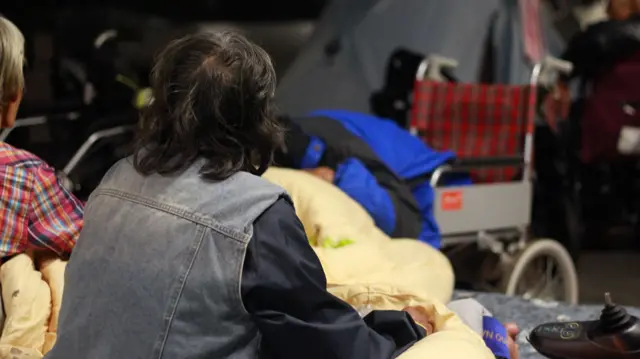
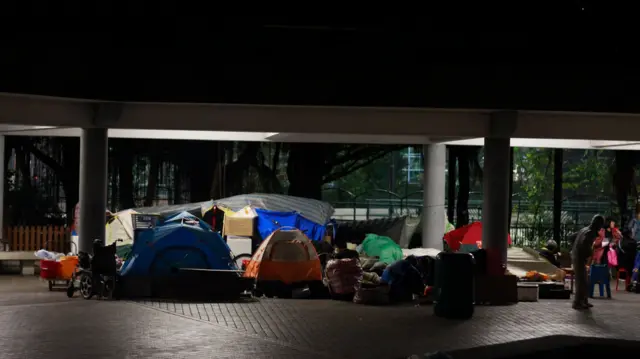
Shao Bi, who is nearly 70 years old, has been sleeping on the streets for nearly seven years. She is currently sleeping with her male partner in Tung Chau Street Park in Sham Shui Po, a gathering place for homeless people in Kowloon. Tents are set up inside, and their belongings and luggage are stored in such a space.
Shaobi and her boyfriend's "residence" is a mattress, and mice occasionally run across the bed. In an interview with BBC Chinese, Shaobi said that she started living on the streets around 2018. She originally lived with her children in a public housing estate, but her family could not afford to take in her partner who was already sleeping on the street, so she chose to move out and wander with her partner.
After living on the streets with her partner for nearly seven years, Shaobi developed severe varicose veins in her feet and now needs an electric wheelchair to get around. Recently, someone stole the battery in her wheelchair, and her belongings are also stolen from time to time, which makes her feel upset.
As the government-subsidized accommodation places are separated for men and women, she did not consider applying. A study by the Social Welfare Association pointed out that female homeless people with partners are often very dependent on their partners and are willing to follow their decision to sleep rough, and will choose to continue sleeping rough because they do not want to separate.
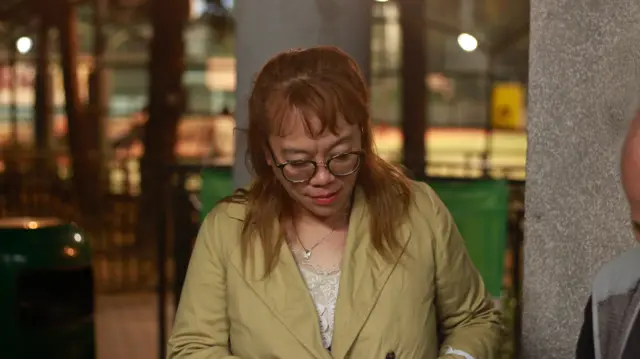
54-year-old Ajie left homelessness at the end of last year and now works in a frozen meat store. Recalling the days of being homeless, she described it as a painful state and often being treated maliciously.
During her years of wandering, Ajie has had the experience of sleeping alone in the open, and she has also slept with her ex-boyfriend in places such as the streets, parks, under overpasses, and in bank ATM halls.
A Jie was detained for drug trafficking because she once received a package of drugs on behalf of a friend. Later, she was acquitted by the court. The public housing unit she originally lived in was repossessed due to arrears of rent. She was a full-time mother and her two sons were taken over by the Social Welfare Department. She could not afford the rent and ended up living on the streets.
Suffering from mental illness, she used to sleep on the streets. Her ex-boyfriend was one of her mental supports and would remind her to take psychiatric medication regularly. However, the subsidized accommodation provided to the homeless in Hong Kong cannot accommodate couples. In order to be with her ex-boyfriend, she chose to continue sleeping on the streets.
A Jie also lived in a temporary dormitory, but the poor environment and lack of privacy made her unwilling to live there. Later, with the help of non-governmental organizations, she and her ex-boyfriend rented a subdivided flat and found a job as a cleaner to earn income.
Wu Weidong pointed out that even though the Social Welfare Association had suggested in the past few years that the government could refer to foreign examples and add double dormitories for the homeless that are not restricted by gender or relationship so that homeless people with partners can live in them, these suggestions have not yet been promoted or implemented.
In response to questions from the Legislative Council, the Labour and Welfare Bureau said that social workers will make arrangements for the accommodation needs of homeless people and their partners as needed, such as using emergency funds to pay short-term rent or rental deposits for homeless people, helping them rent hotels or private buildings, or referring them to transitional housing.
The government's concerns about cracking down on "poor quality subdivided flats"
After staying in the hotel, Xiaoxing applied for the Comprehensive Social Security Assistance (CSSA) scheme and public housing with the help of the Community Organization Association, and is currently waiting for it. According to data from the Hong Kong Housing Department, as of the end of September 2024, the average waiting time for single elderly people is 3.5 years.
After settling down, she is currently doing some odd jobs to earn a meager income. Xiaoxing hopes to move into public housing as soon as possible, which will give her a sense of security psychologically.
In the "Policy Address" published in 2024, the Hong Kong government proposed to legislate to regulate and ban "inferior subdivided flats" and name the units that meet the specifications as "simple housing."
If the owner violates the law and rents out subdivided flats that do not meet the standards, the government said it would gradually take enforcement action. However, at the time, a civil society organization concerned about the situation of subdivided flats in Hong Kong said that if there were no appropriate supporting resettlement measures, this might cause grassroots subdivided flat residents to face the risk of homelessness.
Chen Shaoming, assistant professor of the Department of Social Sciences and Behavioral Studies at City University of Hong Kong, also mentioned this concern in an interview with BBC Chinese. He believes that single people currently living in subdivided flats will be the most affected, "because they live in relatively small cubicles. If they can't even rent a cubicle for 3,000 or 4,000 Hong Kong dollars, they will either have to live in a bed or even sleep on the streets."
Chen Shaoming explained that if such a situation occurs, it is likely to lead to an increase in the demand for services for the homeless. Even though the government has introduced policies such as transitional housing to benefit some of the homeless, he described it as "a drop in the bucket."
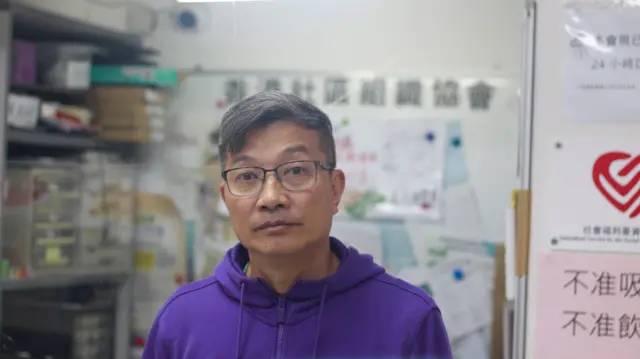
The government-subsidized transitional housing scheme expires this year, but the Hong Kong Society for Community Organization is still operating 105 places, with about 90% of the residents being singles, including the homeless.
Wu Weidong pointed out that the hotel project will expire in 2025. Although he can try to apply for renewal from the government, as the current housing policy is still not favorable to non-elderly single people, he believes that only if the government makes improvements in its policies will there be a chance to benefit more homeless people.
As the hotel lease is about to expire and he is not sure whether he can renew it and continue to live there, Xiaoxing still feels uneasy about the future.
Shaobi said that before public housing is found, "I hope we can continue to live in hotels."
“I don’t want to go back to the streets.”


Comments
Post a Comment