Panama Canal: The history of the battle between the United States and Panama for control
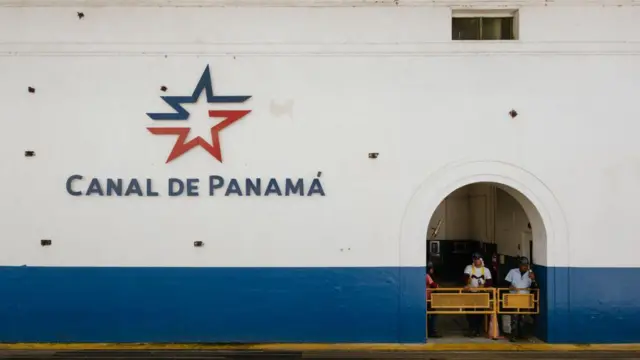
- Redacción
- BBC Spanish
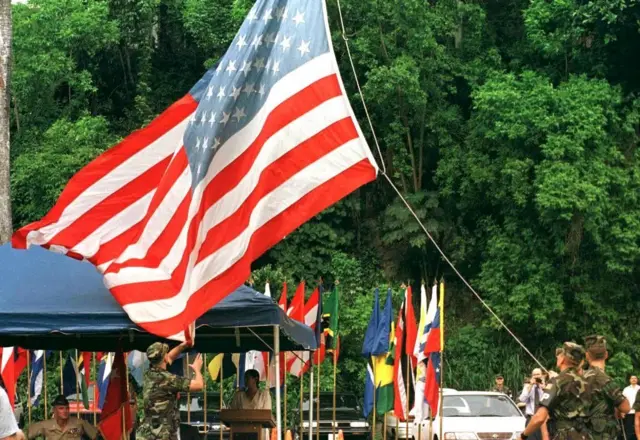
On December 31, 1999, the American flag was lowered and the Panamanian flag was raised for the first time, becoming the only symbol of the Canal Zone. The Panamanians present cheered.
The scene marked the end of an era marked by protests, tensions and death.
"The response of the Panamanian people has been impressive," Alberto Aleman Zubieta, who served as canal administrator for several years, told the BBC.
Twenty-five years later, sovereignty over the transoceanic waterway is back in the headlines following controversial comments from U.S. President-elect Donald Trump.
“We’re being ripped off,” Trump said recently, referring to the fees American ships pay to use the canal.
Trump suggested that if that doesn’t change, “we will demand the full and prompt return of the Panama Canal to the United States, no questions asked.”https://gillspaste.com/sstvsu6tg?key=3c6a2f0c348249bd18222793323d13fd
In response, Panamanian President José Raúl Mulino issued a statement on social media: "Every square meter of the canal will continue to belong to Panama."
So, how did the Panama Canal get to where it is today?
A Civil War and an Opportunity
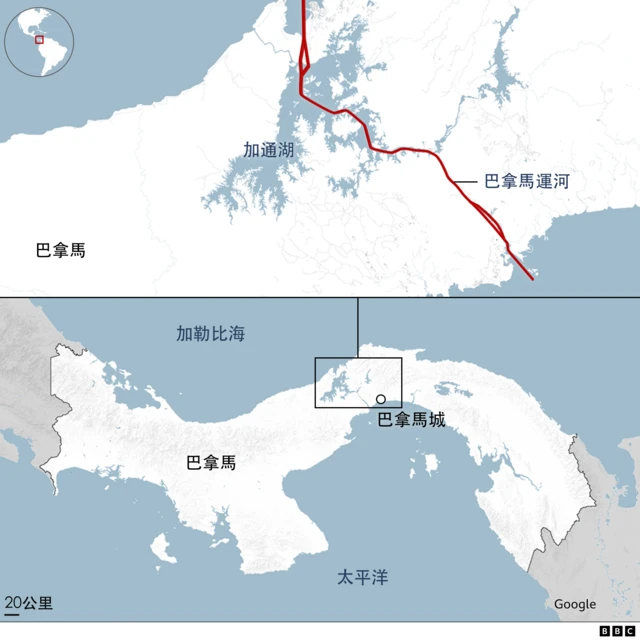
Establishing a passage connecting the Pacific and Atlantic Oceans had been a concern of European settlers since the 16th century.
At the time, the only way to the southern seas was via the Strait of Magellan south of Chile, which meant sailing a long distance and facing the bad weather off Cape Horn.
In the 19th century, a passage through the Isthmus of Panama, then part of Colombia, was the first option to be tried. Bogota awarded the canal construction concession to Ferdinand de Lesseps, a French engineer who had built the Suez Canal in Egypt.
But diseases affecting the workers (many of whom were African slaves), the dampness of the land, and persistent rains bankrupted the project.
At this time, the United States' interest in this waterway continued to grow.
At the time, Colombia was emerging from a civil war that killed thousands and faced high political tensions, which ultimately paved the way for Panama's independence.
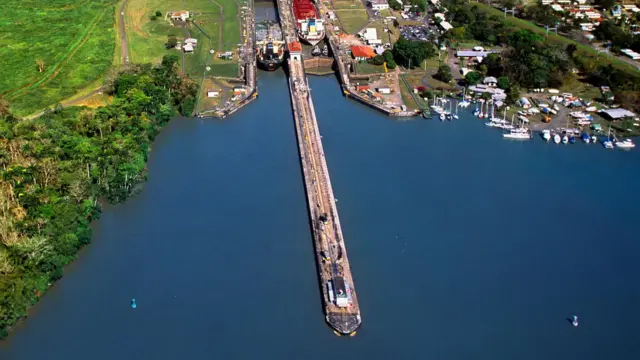
At the time, the United States was an emerging power that already controlled Puerto Rico and Cuba and saw Colombia's internal crisis as a perfect opportunity: it offered to pay $40 million for the concession to build the canal.
This formed the basis of the Herrán-Hay Treaty between Colombia and the United States, which set out the conditions for the concession.
This was a complex negotiation. On August 5, 1903, the Colombian government announced its rejection of the proposal, arguing that it violated national sovereignty.
At this point, Panama (then part of Colombia) declared independence with the support of the United States, ignoring Colombia's rejection of the treaty and stating that the United States would intervene if Colombia retaliated militarily. Panama declared independence on November 3, 1903.
Ultimately, the United States saw in Panama’s discontent “a perfect opportunity to get the treaty they wanted without Colombian interference,” explains Panamanian historian Marixa Lasso.
A divided country and the beginning of tensions
After Panama's independence, the two countries signed the Hay-Bunau-Varilla Treaty, which guaranteed Panama's independence while granting the United States a permanent concession for the canal and control of the so-called Canal Zone, which includes eight kilometers (about five miles) of land on either side of the strategic waterway. Panama was to receive $10 million in compensation.
After the work was completed in 1913, the steamship Ancón became the first ship to pass through the waters, symbolizing the canal's opening to the world.
But tensions soon arose. In effect, the country was physically divided in two. Thousands of Americans and their families lived in this area, under their own laws, while working on the canal, which officially opened in 1914.
There was little contact between the "zonians" and the local Panamanian population, who were unable to enter the area without special permission.
Panamanian discontent grew, culminating in numerous demonstrations demanding an end to the U.S. presence there and the return of the canal.
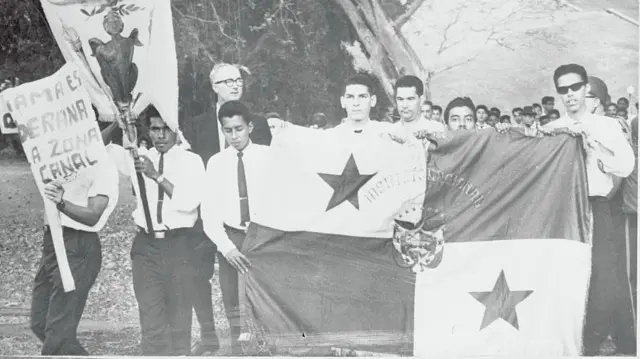
In 1958, a group of college students launched Operation Sovereignty, peacefully planting 75 Panamanian flags on officially U.S. territory.
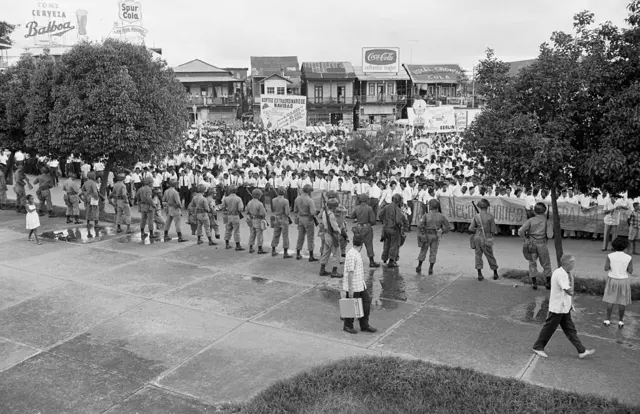
“They told us that this was not a territory that Panamanians could enter. That day we said we were no longer afraid and wanted a new treaty to end the permanence of the colonial presence,” Ricardo Ríos Torres, one of the leaders of the student protest, told BBC Spanish in 2019.
Another event that affected the sovereignty of this transoceanic waterway was the 1959 Patriotic March, when the Panamanian people were invited to enter the Canal Zone carrying the national flag.
The march was initially peaceful, but when protesters were barred from entering the area, clashes broke out between Panamanians and police, leaving dozens injured.
These two events gave rise to a saying that later became popular in Panama: "He who plants the flag, reaps sovereignty."
Martyrs' Day
These events sparked further protests in the following years.
Negotiations culminated in an agreement in 1962 between Panamanian President Roberto Chiari and U.S. President John F. Kennedy that the two countries' flags would fly within the civilian areas of the Canal Zone.
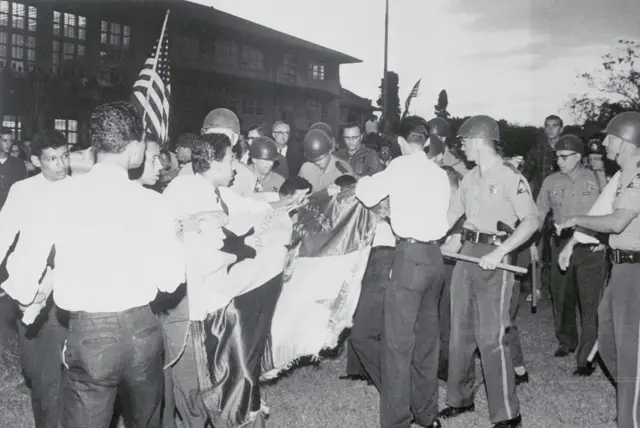
However, when January 1, 1964 arrived—the date the agreement was supposed to go into effect—Canal Zone residents ignored the zone governor’s orders and refused to raise the Panamanian flag.
On January 9, dozens of students from the National College of Panama went to the Canal Zone carrying school flags and demanded that their flag be raised at the local Balboa High School.
However, some U.S. police officers stopped them, and the standoff ultimately left more than 20 protesters dead, hundreds injured and the Panamanian flag desecrated in an event that became known as Martyrs' Day.
Then-President Roberto Chiari responded by suspending diplomatic relations with Washington until the two countries signed a new treaty.
Many analysts consider this event to be a major catalyst in the transfer of the Panama Canal to Panama 35 years later.
Torrijos-Carter Treaty
After that dark January, negotiations between the United States and Panama officially began on April 3, 1964.
The two countries agreed to appoint special ambassadors to conduct the negotiations.
But a decade later, during the presidency of Richard Nixon, a joint declaration was signed in Panama City between U.S. Secretary of State Henry Kissinger and Panamanian Foreign Minister Juan Antonio Tack, providing the clear framework needed to move forward on a final agreement on the future of the Panama Canal that would hopefully be accepted by both sides.
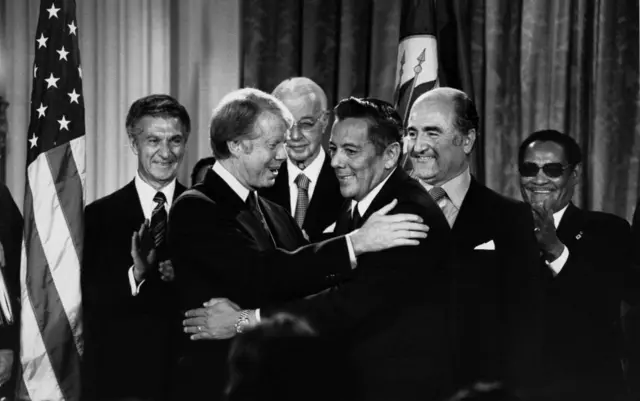
Central to it all was replacing the Sea-Buonavarra Treaty, which gave the United States rights to the canal and jurisdiction over parts of Panama.
This was the basis for the agreement formally signed on September 7, 1977 between US President Jimmy Carter and Panamanian National Guard Commander Omar Torrijos.
In short, they agreed that sovereignty over the Canal Zone would be governed by Panamanian law and set a date for the transfer of ownership of the transoceanic waterway to Panama: December 31, 1999.
Carter said that by returning the canal to the Panamanians, the United States was demonstrating "our ability as a large and powerful nation to deal fairly and honorably with a proud but smaller sovereign nation."
return
After a transition period, just days before the turn of the century, officials from around the world arrived in Panama for the official ceremony that had become a dream for local residents. Carter himself was there.
Giant screens showing countdown clocks were set up at various locations in Panama City.
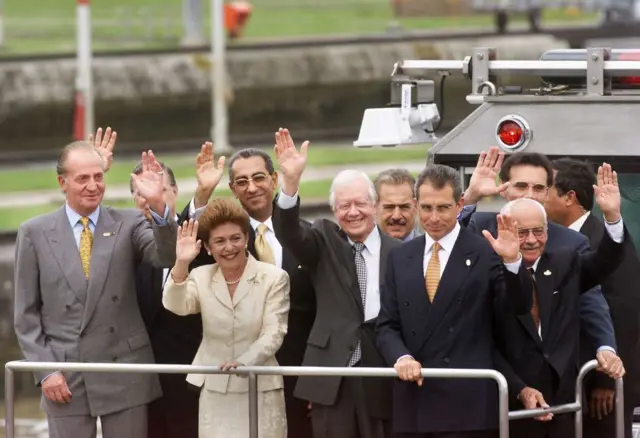
The handover was formally completed when Panamanian President Mireya Moscoso raised the Panamanian flag at the Canal Authority building.
“Panama, the canal belongs to the Panamanians,” the president said that day. “Panama has finally achieved the integrity of a sovereign state.”


Comments
Post a Comment