Trump's oil card: How embargoes against Russia and Iran could further roil oil prices
- Jeremy Howell
- BBC reporter
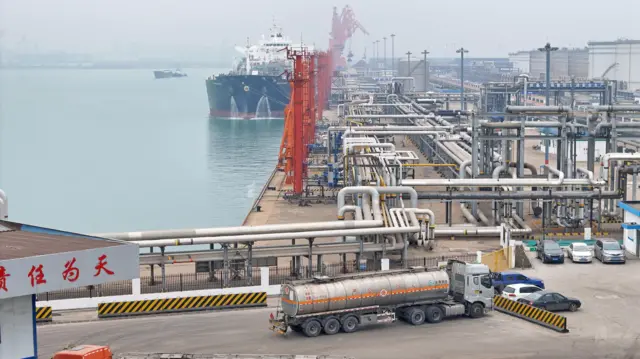
The United States has been tightening sanctions on Russia and Iran, targeting their most lucrative export: oil. Washington is targeting their "shadow fleet" of tankers, which are hard-to-track tankers used by Russia and Iran to illegally transport oil.
The sanctions are also cutting oil supplies to China, a major buyer of Russian and Iranian oil, creating global shortages and triggering a surge in prices in recent weeks.
Donald Trump may impose new, tougher sanctions on Russian and Iranian oil, which could further push up prices.
How much oil are Russia and Iran exporting, and who is buying it?
Russia keeps its oil export data secret, but the International Energy Agency estimates it currently sells about 7.33 million barrels per day. Russia is a major supplier to China and provides more than a third of India's oil imports, according to the Centre for Research on Energy and Clean Air.
The UK and the US will ban Russian oil imports from March 2022.
Russia earns about $190 billion a year from oil exports, which helps support its war spending.
The Group of Seven (G7) has set a price ceiling of $60 per barrel for Russian crude oil exports. The G7 controls this price through the shipping companies and ship insurers under its jurisdiction.
However, Neil Fleming of Argus Media, an energy and commodities data company, said: "The price ceiling has failed. Over the past year, Russian oil, such as Urals, has regularly been sold for more than $60 a barrel and sometimes more than $75."
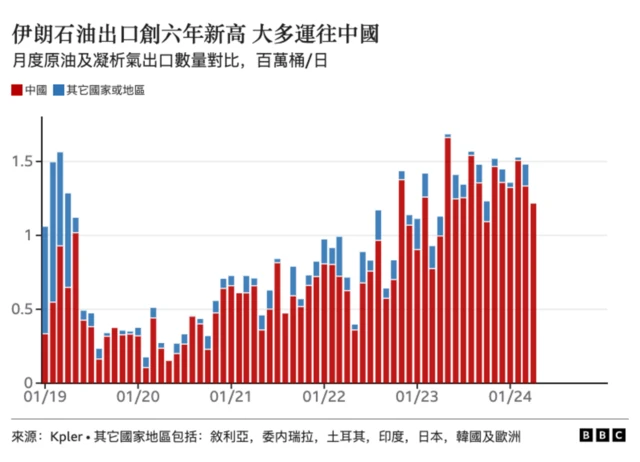
Iran’s oil exports are believed to be around 1.7 million barrels per day, of which around 1.2 million to 1.3 million barrels go to China (although Tehran also remains secretive about its export figures).
According to some reports, Iran also exports about 400,000 barrels of oil per day to India.
The U.S. government has banned imports of Iranian oil and prohibited foreign companies involved in Iranian oil exports from doing business with the U.S. since 2012. The White House wants to deprive Iran of funding for its nuclear weapons and ballistic missiles, as well as its ability to support armed groups such as Hamas, Hezbollah and the Houthi rebels.
During Trump's first term as U.S. president, he tightened these sanctions in 2019 and 2020.
Still, Iran manages to export large quantities of oil to China, in part because much of it is bought by small refineries nicknamed "teapots."
Fleming stressed that these small oil refineries "have no trade with the United States and are at little risk of being sanctioned."
Sanctions and Response
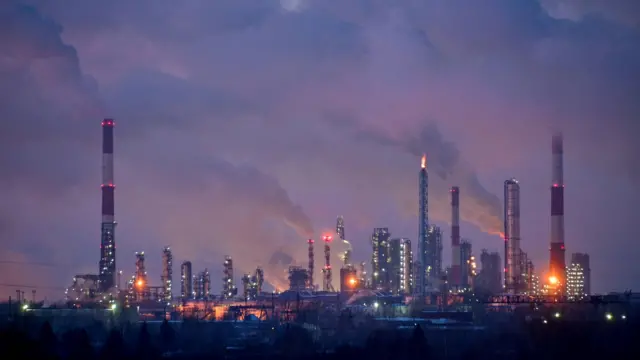
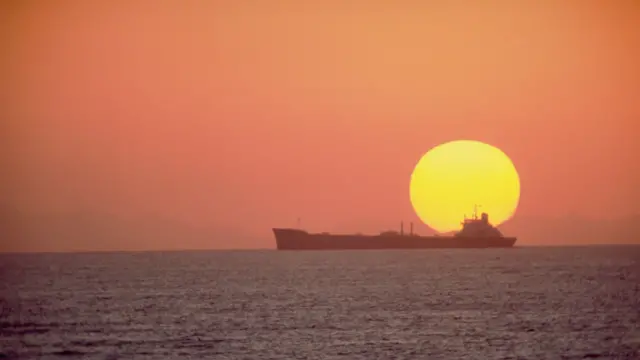
Both Russian and Iranian oil exporters have sought to circumvent sanctions by shipping crude on tankers that make up the so-called “Shadow Fleet” (Russia) or “Dark Fleet” (Iran).
The shadow fleet's tankers are registered in countries that allow ship ownership details to remain opaque, making it difficult for the U.S. to punish their owners. The dark fleet's tankers tend to turn off their transponders at sea to remain secretive and undetected.
In January 2025, during the final days of the Biden administration, the United States imposed sanctions on 183 tankers carrying Russian and Iranian oil and two Russian oil companies, Gazprom Neft and Surgutneftegas. The White House also imposed sanctions on tankers carrying Iranian oil in October 2024 in response to Iran's missile attack on Israel, and on tankers carrying Russian and Iranian oil in December of the same year.
Homayoun Falakshahi of data company Kpler told the BBC that the US has imposed sanctions on 23% of ships carrying Iranian oil and about 9% of ships carrying Russian oil. "We have seen a drop of about 20% to 25% in the volume of Russian and Iranian oil imported into China. There are about 20 million barrels of oil waiting to be unloaded in Chinese waters."
He added: "This is because Shandong Port, which mainly handles Iranian oil, does not accept any tankers on the sanctions list." Indian refiners have also said they will stop accepting deliveries of US-sanctioned oil from Russia.
Falakshah said news of the sanctions was one of the main factors behind the rise in oil prices in recent months.
News of sanctions on Russian oil exports in January pushed the price of Brent crude, the international benchmark, to a five-month high of more than $80 a barrel before falling back below $80. "Russian and Iranian oil exporters will find ways to cope, such as transshipping crude oil to other ships," Falakshah explained. "They will not be permanently affected by U.S. tariffs unless more sanctions are imposed in the future."
Tougher sanctions coming?
Dr Burcu Ozcelik of the Royal United Services Institute (RUSI) said Trump was likely to reimpose sanctions on Iran's oil sector because he had already applied "maximum pressure" on it during his first term.
She told the BBC that illicit oil flows "both benefit the IRGC and fund terror proxies and partners".
The previous Biden administration imposed sanctions on Yemen's Kuwait Trade and Investment Bank for allegedly transferring money to Hezbollah and other groups. Ozelik said the Trump administration may consider imposing sanctions on banks doing similar work in Iraq.
In 2019 and 2020, sanctions imposed by Trump on Iran reduced its exports to just 500,000 barrels per day.
Trump is also expected to increase sanctions on Russia in an attempt to cut its oil revenues.
Tom Keatinge of the Royal United Services Institute said: "Expect more shock and surprise sanctions."
He told the BBC: "Trump is expected to tell other countries: if you keep buying Russian oil, we will impose tariffs on your trade. He may encourage them to buy their oil from other countries instead, including the United States."
Falling oil exports from Russia and Iran could create shortages on the global market, further pushing up oil prices in 2025.
But Kate Dourian, a researcher at the Energy Institute, said: "Saudi Arabia alone may have 3 million barrels a day of spare capacity that could be brought to market, and there is 6 million barrels a day of spare capacity globally."
However, she noted that the challenge for Trump will be convincing global producers to add large amounts of additional oil supply simply to bring down prices. “Producers need high oil prices as an inducement to invest in new capacity.”


Comments
Post a Comment