How did Trump’s 40-year tariff obsession originate from Japan?
- Nada Tawfik
- BBC New York correspondent
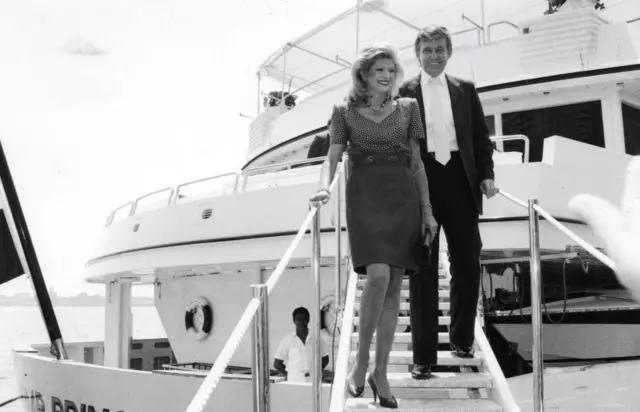
When Donald Trump was in financial trouble in the 1990s and needed to raise cash, he headed to Asia on his 85-meter superyacht, the Trump Princess, hoping to woo wealthy Japanese.
This is not the first time the businessman has sought Japanese buyers or lenders for his projects.
In the competitive world of New York real estate, Trump watched from his Fifth Avenue skyscraper as Tokyo Capital went on a buying spree in the 1980s for iconic American brands and properties, including Rockefeller Center.
It was during this period that his worldview on trade and America's relations with its allies began to take shape, and he began to become obsessed with a tariff policy of imposing taxes on imported goods.
“He has a strong grudge against Japan,” said Barbara Res, a former executive vice president of the Trump Organization.
She noted that Trump watched with envy as Japanese businessmen were treated as geniuses and felt the United States was not getting enough in return while assisting its ally Japan with its military defense.
Trump has often complained about the difficulty of dealing with large Japanese business groups.
“I’m tired of watching other countries take advantage of America,” Trump’s famous quote, which sounds like it came from his 2016 campaign speech, actually originated from his appearance on CNN’s “Larry King Live” in the late 1980s - during that period when he first emerged in public as a potential presidential candidate.
Fresh off publishing his 1987 book, The Art of the Deal, in which he laid out his business philosophy, Trump launched a national television interview in which he fiercely criticized U.S. trade policy.
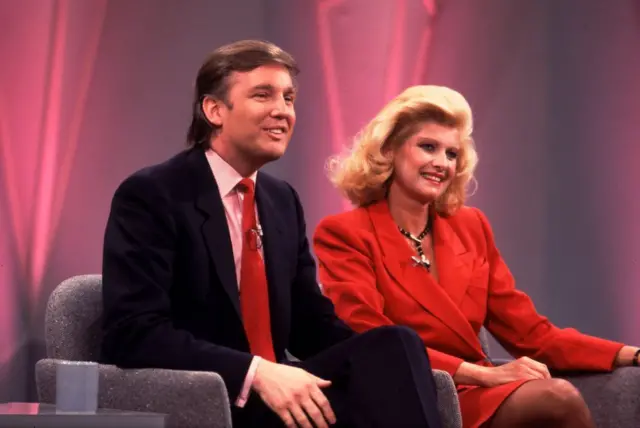
In an emotional speech to host Oprah Winfrey, speaking live on "The Oprah Show" before a studio audience, he said he would approach foreign policy differently and ask allies to "pay their fair share."
He added that there was no such thing as free trade when Japan was "dumping" products on the U.S. market but making it "almost impossible for U.S. companies to do business" in Japan.
Jennifer Miller, an associate professor of history at Dartmouth College, pointed out that Trump's economic concerns in this regard were shared by many people at the time.
Japan poses strong competition to the US manufacturing industry in the consumer electronics and automobile sectors. As US factories close down and new Japanese brands enter the market, experts and scholars are discussing that Japan will surpass the United States to become the world's largest economy.
"Trump, to some extent, symbolizes the many people at the time who questioned whether the US-led international order was truly in the national interest," Professor Miller analyzed.
Before participating in Oprah's show, Trump spent nearly $100,000 to publish a full-page "open letter" in three major newspapers.
The title of the letter points directly to "What the US foreign and defense policy lacks is backbone", and the content accuses Japan and other countries of taking advantage of the US for decades. The article particularly emphasizes that "Japan has built a strong economy with an unprecedented surplus because it does not have to bear huge defense expenditures (as long as the US is willing to do it for free). "
Trump argues that the solution is clear - "tax" these wealthy countries.
"Politicians around the world laugh at America as we protect foreign tankers, ship oil we don't need, and serve allies who don't want to help," he wrote in the letter.
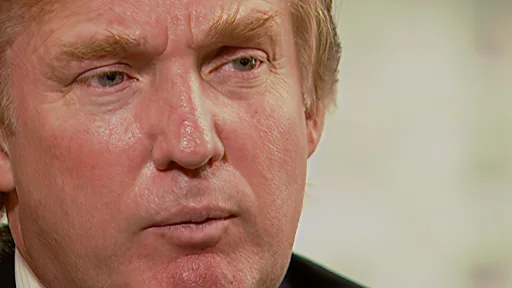
Professor Miller analyzed that this advertisement strongly revealed Trump's foreign policy blueprint - its core concept is based on zero-sum game thinking, believing that allies are free riders, and that the liberal internationalism that dominated after World War II appears weak and foolish in global competition. He advocates replacing it with a more aggressive protectionist trade policy.
"The tariff policy is highly consistent with Trump's ideology and self-perception," Miller explained. "It not only reflects his philosophy of transaction first, but also strengthens his image as a 'successful dealmaker'... Moreover, tariffs can be used as a threat and can put pressure on another country at any time."
Clyde Prestowitz, who served as an adviser to the Secretary of Commerce in the Reagan administration and was in charge of negotiations with Japan, bluntly stated that no serious policy researcher at the time agreed with Trump's simplification strategy.
The expert, who has long criticized free trade, pointed out that Trump has never proposed a substantive solution to the trade imbalance: "Tariffs are essentially a showmanship tool that allows politicians to show off 'look how tough I am', but the actual effect is highly controversial."
Prestowitz stressed that the fundamental problem of the United States is that it lacks a strategic manufacturing policy, but is keen to accuse other countries of unfair trade.
It is worth noting that the Japanese economic threat theory that once caused panic has faded over time. Now Japan has become an ally of the United States, and the main competitor in the current business community is actually China. This week, Trump's reception of the Japanese Prime Minister was one of his first foreign affairs activities after taking office, once again highlighting this strategic relationship change.
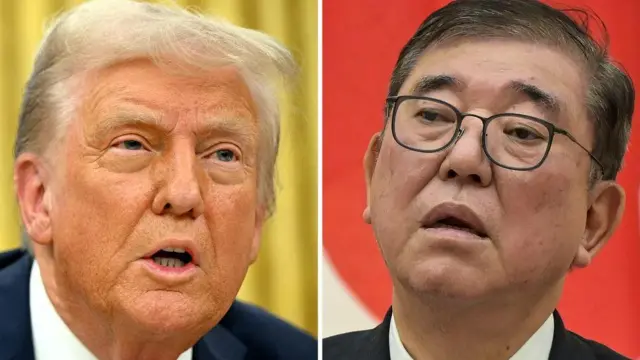
But Trump's governing philosophy remains the same as when he was a real estate developer in his youth. He still firmly believes that tariffs are a powerful tool to pressure other countries to open their markets and reduce trade deficits.
“For 40 years, he’s been repeating this to anyone who’ll listen, whenever they ask,” said Michael Strain, an economist at the conservative think tank American Enterprise Institute. “It’s fair to say that this is a very intuitive way to look at international trade.”
Strang said that economics students often display intuitive economic thinking similar to Trump's, and the major challenge facing professors is to convince them that this understanding is fallacious.
While Trump has seized control of the party's narrative by upending decades of Republican free-trade tradition, Strang believes he has failed to convince skeptical lawmakers, business leaders and economists.
The key differences remain: Trump views foreign imports as harmful, measures policy success or failure by the size of the trade deficit, and believes that the ideal U.S. economy should only import goods that cannot be physically produced domestically. Strang believes that threatening to impose tariffs on U.S. allies could suppress business investment and weaken international alliances.
Joseph LaVorgna, chief economist at the National Economic Council during Trump's first presidency, believes that the outside world has focused too much on the tariff issue and has not fully understood the overall strategic goals Trump is trying to achieve.
He noted that the president intends to revive domestic industries, especially high-tech manufacturing.
LaVornia explained that the government team believes that if tariffs are combined with loosening regulations, reducing energy costs and corporate tax cuts passed by Congress, they can effectively attract more companies to set up factories in the United States.
“As a businessman and a practical dealmaker, President Trump understands the key point: free trade is good in theory, but the real world requires fair trade and a level playing field.”
For now, Lavorgna is betting that Trump is on the right track. Few Republicans are openly opposing the president, especially as he demands loyalty to his agenda.
However, some silent voices are well aware that people in their constituencies may suffer from rising prices and still hope to persuade Trump to abandon his favorite tariff policy.


Comments
Post a Comment